
What Is Inventory Warehouse Management?

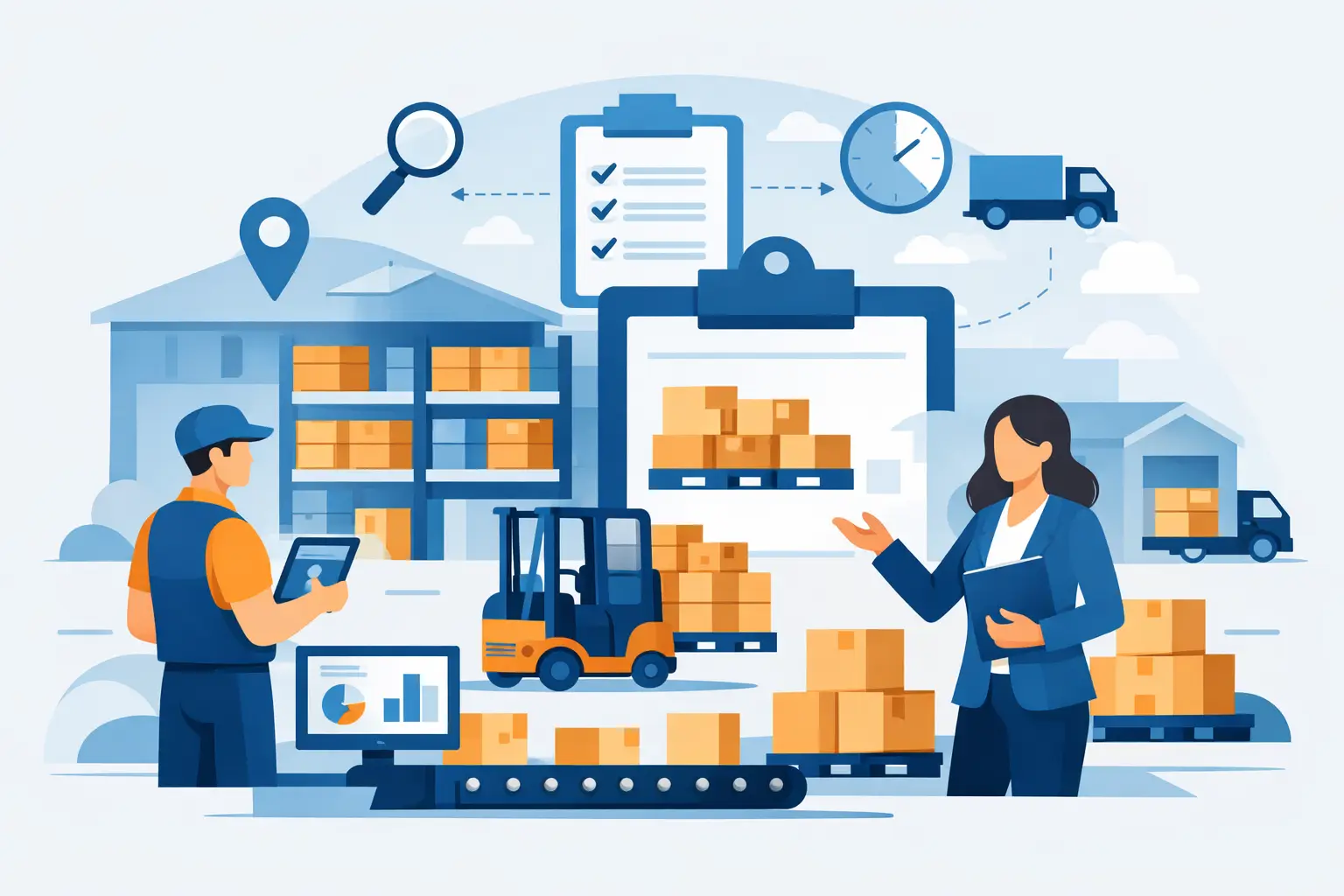
If stock is sitting in the wrong place, recorded at the wrong level, or picked too slowly, the problem is rarely just storage. It affects delivery promises, customer experience, labour efficiency and cash flow. That is why the question what is inventory warehouse management matters so much for businesses that rely on dependable fulfilment and distribution.
At its simplest, inventory warehouse management is the process of storing, tracking, controlling and moving stock within a warehouse so the right goods are available in the right quantity at the right time. It brings together physical storage and digital stock control. In practice, that means knowing what inventory you hold, where it is located, how quickly it moves and when it needs to be replenished, dispatched or returned.
For growing e-commerce retailers, courier networks, wholesalers and multi-channel businesses, this is not just an admin task. It is a core operational function. When inventory and warehouse activity are managed properly, businesses gain visibility, reduce waste and improve service levels. When they are not, errors multiply quickly.
What is inventory warehouse activity in practice?
A warehouse is the physical environment where goods are received, stored, picked, packed and sent out. Inventory is the stock itself, whether that means pallets of packaged goods, individual consumer products, spare parts or seasonal lines. Inventory warehouse activity is the day-to-day control of both.
This includes booking stock in when it arrives, checking quantities, assigning storage locations, recording movements, managing stock rotation, carrying out counts and preparing goods for despatch. It also covers the systems and processes that support those tasks, from barcode scanning to warehouse management software.
The reason businesses often treat inventory and warehousing as one discipline is simple. Stock accuracy depends on warehouse discipline, and warehouse efficiency depends on accurate stock records. If one slips, the other follows.
Why inventory warehouse management matters
For most businesses, stock is one of the biggest operational costs on the balance sheet. Too much of it ties up cash and warehouse space. Too little of it creates missed sales, delayed fulfilment and pressure across the supply chain. Good warehouse inventory control helps strike the balance.
It also protects service performance. If a business promises next-day or same-day delivery, the warehouse needs to support that promise with accurate stock locations, efficient picking routes and reliable despatch processes. A fast transport network cannot compensate for poor stock handling upstream.
There is also a planning benefit. Clear inventory data helps procurement, sales and operations teams make stronger decisions. They can spot slow-moving stock, prepare for peaks, prevent over-ordering and allocate resources more effectively. That level of visibility becomes even more valuable when a business is scaling or managing more than one sales channel.
The core parts of an inventory warehouse operation
Every operation is different, but most warehouse inventory management rests on the same building blocks.
Receiving is the first. When goods arrive, they should be checked against purchase orders or delivery notes, inspected for damage and entered into the stock system correctly. If errors happen at goods-in, they tend to ripple through the whole operation.
Storage comes next. Inventory needs to be placed in logical, traceable locations based on product type, demand frequency, handling needs and space efficiency. Fast-moving items should usually be easier to access than slow-moving lines, but there are exceptions. Fragile products, regulated goods or oversized stock may need specialist handling.
Tracking is where control becomes measurable. Stock movements should be recorded whenever goods are relocated, picked, packed, returned or written off. This is what allows a business to trust its stock file rather than rely on assumptions.
Picking and packing are the customer-facing stages, even if the customer never sees them. Accurate picking, secure packing and timely despatch all depend on warehouse organisation and stock visibility. A stock record that says an item is available is only useful if the warehouse can actually find and process it without delay.
Finally, there is stock counting and review. Cycle counts, spot checks and periodic reconciliations help maintain accuracy and identify problems early. Shrinkage, damaged goods, booking errors and misplaced inventory are far easier to manage when they are caught quickly.
What good inventory warehouse management looks like
A well-run warehouse is not just tidy. It is controlled. Stock records match physical inventory. Goods move through the building with minimal delay. Teams know where products are stored and how they should be handled. Exceptions are flagged early rather than discovered at the point of despatch.
Good performance usually shows up in a few key areas. Order accuracy stays high. Stock discrepancies stay low. Space is used efficiently without making picking slower. Returns are processed cleanly. Customers receive the right goods on time, and internal teams have confidence in the data.
That said, the right setup depends on the business model. A high-volume e-commerce operation may prioritise rapid pick speed and parcel despatch. A wholesale distributor may focus more on pallet storage, replenishment accuracy and delivery scheduling. A courier or 4PL partner may need stronger cross-docking and time-sensitive handling. Warehouse inventory systems should fit the operation, not the other way round.
Common challenges businesses face
The most common problem is poor stock visibility. A business may technically hold enough stock, but if items are in the wrong location, mislabelled or not updated in the system, availability becomes unreliable. That creates avoidable pressure on customer service and fulfilment teams.
Manual processes are another issue. Spreadsheets and paper-based stock control can work at a small scale, but they become risky as order volumes grow. Human error increases, reporting slows down and teams spend more time checking stock than moving it.
Space management is also a regular challenge. Warehouses often become less efficient over time as product ranges expand, demand patterns shift and temporary fixes turn into permanent ones. Without regular review, layouts stop matching the reality of the operation.
Seasonality adds another layer. Peak trading periods can expose weak receiving processes, poor replenishment discipline and inadequate labour planning. Businesses that manage these periods well usually do so because their inventory warehouse controls are already strong before demand rises.
The role of technology in inventory warehouse control
Technology does not replace process, but it makes good process more reliable. Warehouse management systems help businesses record stock movements in real time, monitor inventory levels, assign locations and improve picking accuracy. Barcode scanning and handheld devices reduce manual input and speed up routine tasks.
For decision-makers, the bigger advantage is visibility. Live data makes it easier to understand stock ageing, order status, replenishment needs and operational bottlenecks. That supports better planning across warehousing, transport and procurement.
Still, technology is not a cure-all. A poor layout, unclear labelling or inconsistent training will still cause issues even with the best software in place. The strongest operations combine capable systems with disciplined warehouse routines and clear accountability.
When outsourced inventory warehousing makes sense
Not every business should run its own warehouse. For some, outsourcing inventory warehousing offers better flexibility, lower fixed costs and faster access to established infrastructure. This is especially relevant for growing e-commerce brands, businesses entering new regions, or organisations dealing with volatile order volumes.
An outsourced partner can provide storage space, inventory control, order fulfilment and transport coordination as part of one service model. That reduces internal complexity and can improve resilience, particularly when demand changes quickly.
The trade-off is control. Businesses need clear reporting, agreed service levels and confidence that the provider understands their stock profile and delivery expectations. A reliable logistics partner should offer visibility as well as capacity. That is where operational discipline matters more than promises.
For businesses looking to simplify stock handling and distribution under one roof, a provider such as NR Logistics can add value by aligning warehousing with transport and fulfilment rather than treating them as separate functions.
How to assess whether your warehouse inventory setup is working
A simple question helps: can your team trust the stock data without checking the shelf? If the answer is no, there is usually a process gap worth fixing.
It is also worth looking at order accuracy, stock variance, average picking time, storage utilisation and returns handling. These indicators reveal whether the warehouse is supporting growth or quietly slowing it down. If customer promises are becoming harder to keep, inventory control is often part of the issue.
The most effective operations review warehouse inventory regularly, not just when something goes wrong. Small improvements in layout, stock rotation, scanning discipline or replenishment planning can have a direct effect on speed, cost and service continuity.
A warehouse should do more than hold stock. It should help your business move with confidence, respond faster to demand and protect delivery performance when it matters most.