
What Is Last Mile Delivery in Logistics?

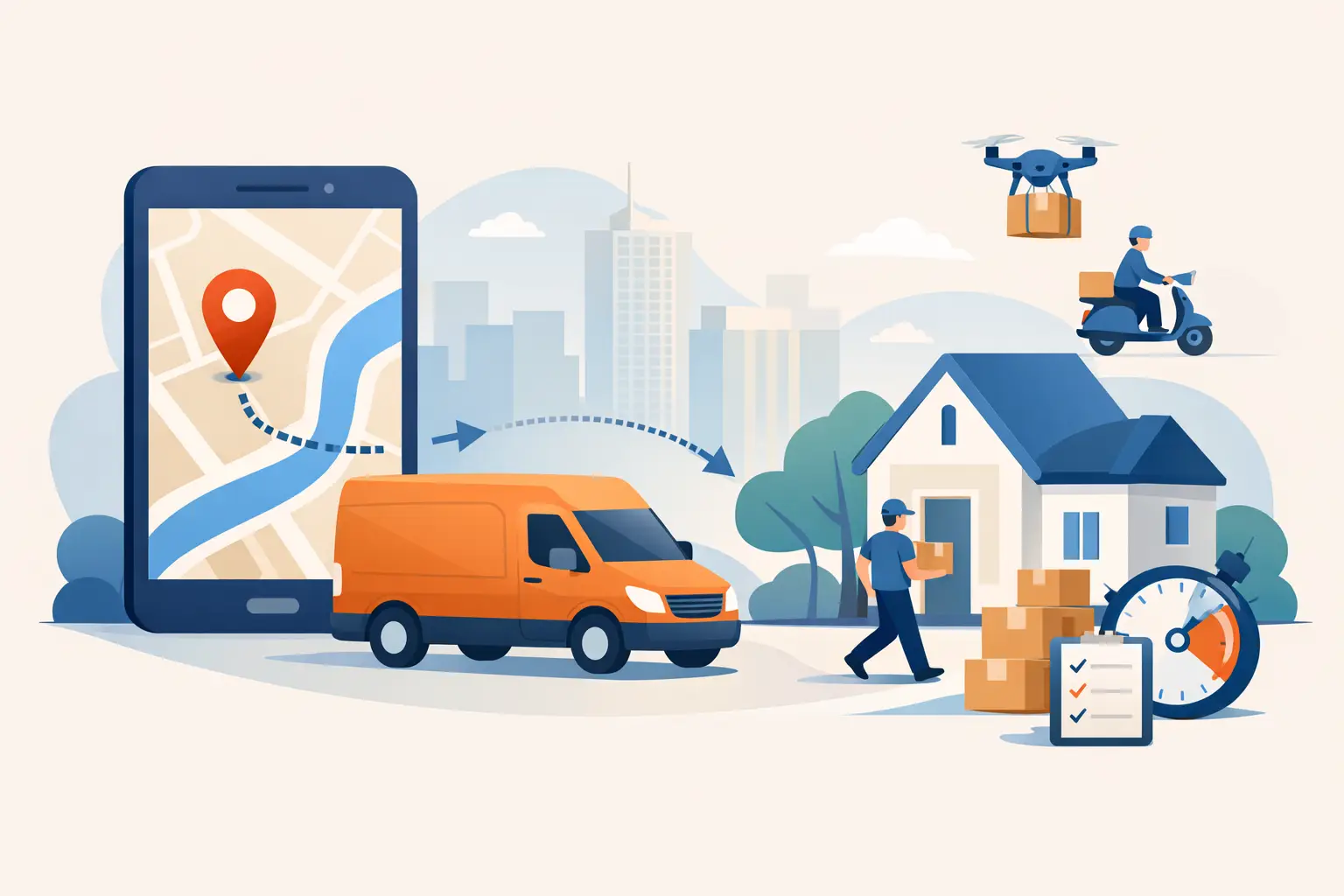
When a parcel is out for delivery, most of the supply chain work is already done – but the hardest part is often still ahead. That final journey from a local hub or warehouse to the customer’s doorstep is where expectations are highest, costs can rise quickly, and service quality becomes highly visible. If you are asking what is last mile delivery, it is the final stage of the logistics process, and it plays a direct role in customer satisfaction, delivery efficiency, and operational control.
For businesses that depend on fast, accurate fulfilment, last mile delivery is not a minor handoff at the end of the chain. It is the stage customers remember. A late arrival, failed delivery, poor communication, or damaged item can undo the value created by good warehousing, stock management, and transport planning earlier in the journey.
What is last mile delivery?
Last mile delivery refers to the movement of goods from a distribution centre, fulfilment hub, depot, or local warehouse to the final delivery address. That address could be a home, a business site, a retail premises, or another end point.
Despite the name, the distance is not always literally one mile. It may be a few streets across town or a much longer run across a wider delivery area. The term describes the final leg of the journey rather than the exact distance travelled.
In practical terms, this is the point where a shipment leaves the wider transport network and enters the most time-sensitive and customer-facing part of distribution. For courier firms, retailers, and fulfilment businesses, it is the stage where delivery promises are either met or missed.
Why last mile delivery matters so much
Last mile delivery carries a disproportionate amount of pressure compared with its distance. Earlier stages of transport usually involve larger volumes, planned routes, and predictable handovers between facilities. The final stage is more fragmented. Drivers manage individual stops, tight delivery windows, traffic conditions, access issues, and customer availability, often all within the same route.
That complexity affects both cost and service. Last mile delivery is often one of the most expensive parts of the logistics chain because it involves more labour, more route variation, more failed delivery risk, and lower drop density than trunking or bulk transport.
It also matters because it is where customer experience becomes tangible. A buyer may never see the warehouse operation behind an order, but they will notice whether the parcel arrived on time, whether tracking updates were clear, and whether the handover was handled properly.
For B2B supply chains, the same principle applies. If a critical shipment arrives late to a site, store, or partner location, it can interrupt operations, delay fulfilment, or create avoidable service failures further down the line.
How the last mile delivery process works
The process usually begins once goods arrive at a local delivery point. From there, consignments are sorted by route, delivery area, timing requirement, and vehicle capacity. Drivers are assigned runs based on planned schedules, service levels, and location data.
Once the vehicle leaves the depot, the delivery operation becomes highly dynamic. Traffic, weather, customer instructions, restricted access, and redelivery issues can all affect performance. In some cases, deliveries are completed on a standard route basis. In others, the model may involve same-day delivery, timed delivery slots, specialist handling, or dedicated fleet support.
Proof of delivery, tracking updates, failed delivery management, and customer communication all form part of the process. For business customers, visibility at this stage is particularly important because it supports customer service teams, protects brand reputation, and helps operations teams respond quickly if issues arise.
What is last mile delivery in e-commerce and retail?
In e-commerce, last mile delivery is often the most visible part of the entire customer journey after checkout. Customers expect accurate delivery estimates, prompt updates, and reliable arrival times. Those expectations have increased significantly as next-day and same-day services have become more common.
For online retailers, last mile performance influences repeat purchases, returns management, customer reviews, and margin control. Fast delivery can improve conversion, but only if the operation behind it is dependable. Promising speed without the transport capacity, warehousing support, and route planning to sustain it usually creates more problems than it solves.
Retail and fulfilment businesses also need to think beyond parcels. Some products require careful handling, secure delivery, age verification, or appointment-based fulfilment. In these cases, the final delivery stage needs a more structured operational model, not just additional vans on the road.
The main challenges in last mile delivery
The biggest challenge is balancing speed, cost, and reliability. Most businesses want all three, but trade-offs are common. Faster delivery windows often increase operating cost. Broader coverage can reduce route efficiency. Lower-cost models may limit flexibility during peak periods.
Urban congestion is another major factor, especially across towns and cities where traffic, parking restrictions, and low-emission requirements can slow down delivery schedules. Rural delivery has a different challenge: longer distances, lower stop density, and more time per drop.
Failed deliveries remain a persistent issue. If the recipient is unavailable, access is unclear, or delivery information is incomplete, the cost rises quickly. A second attempt adds labour, fuel, vehicle use, and administrative time.
Peak trading periods also put pressure on networks. Seasonal demand, promotional spikes, and unexpected order surges can expose weak planning quickly. Businesses that rely on inflexible delivery capacity often feel this first in the last mile.
What good last mile delivery looks like
A strong last mile operation is not defined by speed alone. It is defined by control. That means the ability to move goods accurately, communicate clearly, and adapt when circumstances change.
Good last mile delivery usually includes dependable route planning, real-time tracking, prompt exception handling, and delivery teams that understand both service standards and commercial urgency. It should also connect properly with warehousing, inventory flow, and upstream transport, because final delivery cannot be managed well in isolation.
This is where a broader logistics partner can add value. Businesses often outgrow a simple courier-only approach when volumes increase, service requirements become more complex, or multiple providers create too much operational friction. Integrated support across storage, dispatch, transport, and final delivery can reduce handover risk and improve consistency.
The role of technology and data
Technology has become central to last mile performance, but tools only matter if they support better execution. Route optimisation software can improve delivery sequencing and reduce wasted mileage. Tracking systems give customers and operations teams better visibility. Digital proof of delivery helps resolve disputes quickly and maintain service records.
Data also helps businesses make better commercial decisions. If certain postcodes consistently generate delays, if failed deliveries are concentrated around specific time slots, or if one service model is producing higher cost per drop, that insight supports more effective planning.
For growing businesses, visibility is often as valuable as speed. Knowing where stock is, when orders are leaving the warehouse, and how deliveries are progressing allows teams to manage customer expectations with confidence.
Sustainability in the last mile
Sustainability is now part of the last mile conversation for practical as well as environmental reasons. Clean air zones, emissions targets, and customer expectations are all shaping delivery networks across the UK.
Electric vehicles are becoming an increasingly relevant option for urban and regional delivery routes, especially where businesses need to lower emissions without compromising service levels. They are not the answer to every route profile – range, charging infrastructure, and payload requirements still matter – but for many operations they offer a viable and commercially sensible way to reduce environmental impact.
This is one area where logistics planning needs a clear-eyed view. A greener fleet can support brand goals and compliance requirements, but it has to be matched with realistic route design, charging strategy, and service commitments.
Choosing the right last mile delivery partner
For business customers, the right provider should offer more than available vehicles. The real question is whether the delivery operation can support your wider supply chain. That includes service continuity, scalable capacity, clear communication, and the ability to manage changing volumes without losing control.
It also helps to look at how last mile fits into the broader logistics model. If your business needs warehousing, fulfilment support, same-day capability, or coordinated multi-provider management, a partner with wider operational coverage can remove friction and strengthen accountability. That is often more effective than stitching together separate providers for storage, linehaul, and final delivery.
At NR Logistics, that joined-up approach is central to how modern distribution should work. Last mile delivery performs best when it is backed by dependable warehousing, strong transport coordination, and the flexibility to scale with demand.
Last mile delivery may be the final stage of the journey, but it often has the first and longest-lasting impact on how your service is judged. Get it right, and you protect customer trust where it matters most.