
What Is Same-Day Delivery?

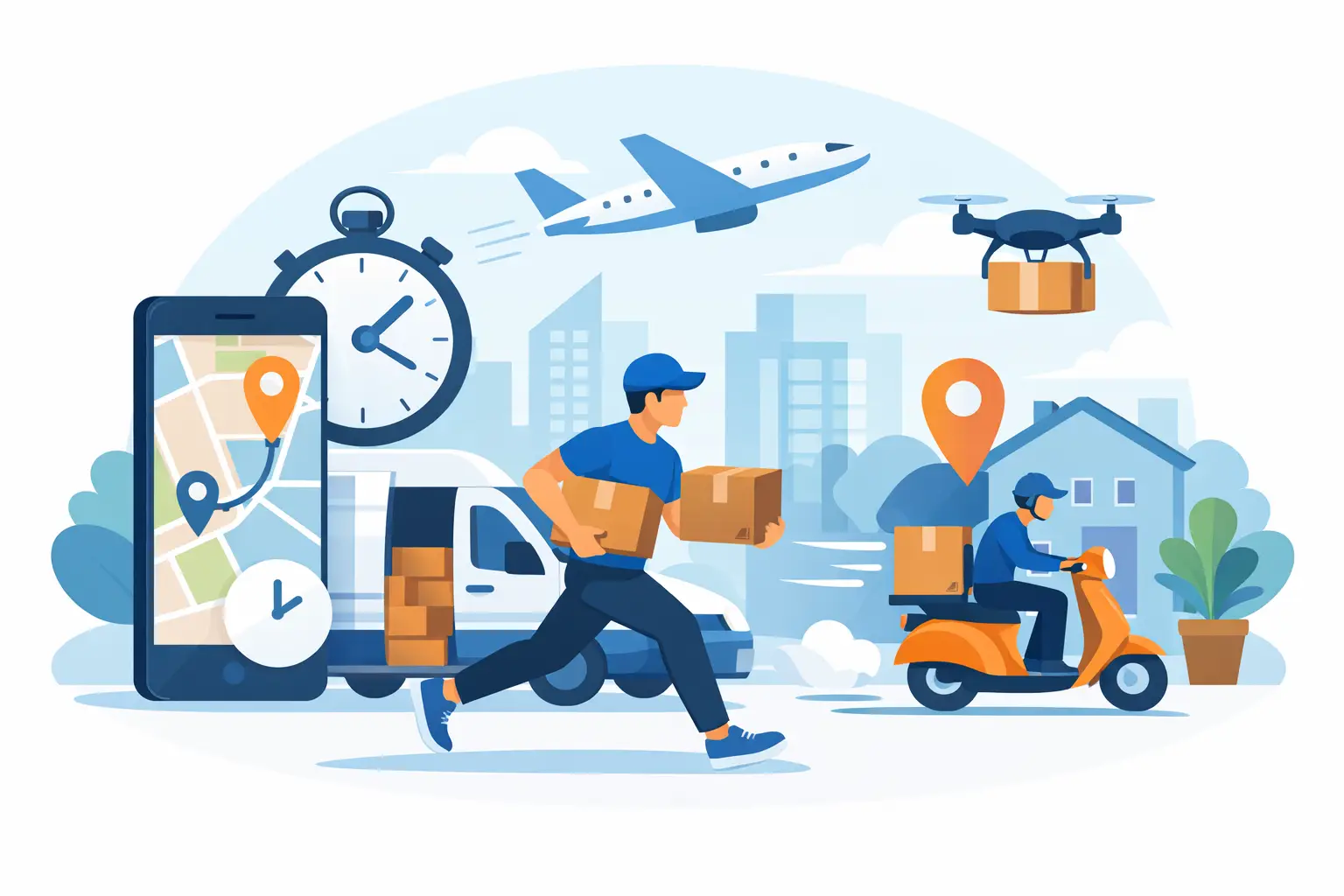
When a customer places an order at 10am and expects it to arrive before close of business, speed alone is not the real challenge. The challenge is whether the operation behind that promise can collect, route, track and deliver without delays, missed handovers or rising costs. That is the practical answer to what is same-day delivery – a time-critical service built around immediate fulfilment and controlled execution on the day an order is placed.
For businesses, same-day delivery is not simply a premium courier option. It is a logistics capability that shortens lead times, supports urgent movements, and helps protect service levels when standard next-day networks are not fast enough. In sectors where timing affects customer satisfaction, stock continuity or contractual performance, it can be the difference between keeping operations moving and absorbing avoidable disruption.
What is same-day delivery in practice?
Same-day delivery is a service in which goods are collected and delivered on the same calendar day. In most cases, once the booking is confirmed, the shipment moves directly or through a tightly managed routing plan so that delivery happens within agreed time windows that day.
The exact model varies. For some businesses, same-day delivery means an urgent dedicated vehicle collecting from a warehouse and travelling straight to the delivery point. For others, it may involve scheduled same-day fulfilment for e-commerce orders placed before a cut-off time. The principle stays the same: the order does not enter a standard multi-day cycle. It is prioritised for immediate movement.
That distinction matters. Standard parcel services are designed for scale and network efficiency. Same-day delivery is designed for urgency, control and responsiveness. It usually relies on faster dispatch decisions, tighter communication and more flexible transport planning.
How same-day delivery works
A same-day operation starts long before a driver sets off. It depends on stock being available, collection points being ready, route planning being realistic and delivery instructions being clear. If any of those elements are weak, speed becomes difficult to maintain.
The process usually begins when a delivery request is placed, either manually or through an integrated order system. The shipment is assessed based on location, size, urgency and delivery deadline. A vehicle is then allocated, the goods are collected, and the route is planned according to distance, traffic conditions and any customer-specific handling requirements.
In a more advanced model, warehousing, pick-and-pack and transport are linked. That means an order can be received, picked from stock, packed, labelled and dispatched within a very short timeframe. For growing e-commerce businesses and high-volume operators, this joined-up process is often what makes same-day delivery commercially viable.
Tracking is another essential part of the service. Business customers need visibility of collection, in-transit status and proof of delivery. Without that, same-day delivery may be fast, but it is not well managed. Reliable providers build communication into the operation so that dispatch teams, account managers and end customers can all work from the same information.
Why businesses use same-day delivery
The main reason is straightforward: some goods cannot wait until tomorrow. That may be because a customer paid for a rapid service, a site is waiting for critical stock, or a delayed shipment would affect trading, production or service delivery.
In e-commerce, same-day delivery can strengthen conversion and reduce basket abandonment, especially in competitive categories where customers expect convenience. It can also help retailers respond to peak demand, seasonal spikes and late ordering patterns without extending delivery delays.
For supply chain and operations teams, the value is often broader. Same-day delivery can support urgent replenishment between sites, prevent downtime caused by missing parts, and keep service commitments intact when inventory needs to move quickly. It is also useful as a contingency option when planned transport fails or when standard carriers reach capacity.
There is a brand and customer experience benefit as well. Fast delivery can increase trust, but only when it is dependable. If a business advertises same-day service and then misses the delivery window, the damage is often greater than if a slower but realistic promise had been made.
What makes same-day delivery reliable
Speed attracts attention, but reliability is what gives same-day delivery real business value. A dependable service depends on several operational factors working together.
First, there must be capacity. That means access to vehicles, drivers and routing support that can respond quickly without compromising other deliveries. A provider that is overstretched may still accept bookings, but performance tends to suffer when demand spikes.
Second, warehouse and fulfilment processes need to be disciplined. Orders have to be picked accurately and handed over without delay. If dispatch teams lose an hour inside the warehouse, no amount of route planning will recover that time easily.
Third, communication must be immediate and clear. Changes in delivery instructions, failed collections, access restrictions and traffic disruption all need fast handling. Same-day delivery leaves less room for error, so issue resolution has to be built into the service.
Finally, the service has to be realistic about geography and cut-off times. Not every location pair in the UK can support the same response window, and not every product is suitable for urgent same-day movement. Honest planning usually produces better outcomes than overpromising.
When same-day delivery makes commercial sense
It is not the right solution for every shipment. Same-day delivery usually carries a higher cost than standard next-day services because it uses dedicated resource, shorter planning windows and more flexible transport allocation. For low-value goods or non-urgent orders, that cost may not be justified.
Where it does make sense is when the value of speed outweighs the extra spend. That could be because the order is high priority, the customer relationship is commercially significant, or the cost of delay is greater than the delivery fee. Businesses often find the strongest return in urgent B2B movements, premium retail fulfilment, replacement items, medical or technical supplies, and critical stock transfers.
It also makes sense when same-day delivery is part of a wider logistics strategy rather than a last-minute fix. Businesses with integrated warehousing, inventory visibility and responsive transport support are in a stronger position to use same-day services efficiently. They can control cut-off times, manage stock locations and avoid panic-led decision making.
Common limitations and trade-offs
Same-day delivery offers clear advantages, but it comes with constraints. Coverage can vary by region, particularly for remote locations or later collection times. Vehicle type matters too. Larger, heavier or specialist goods may need tailored transport rather than a standard urgent courier setup.
There is also the question of order timing. A same-day promise made early in the day is very different from one made late afternoon. As booking windows narrow, route options reduce and delivery risk increases. Businesses need to balance customer expectations against what can genuinely be achieved.
Cost control is another consideration. Offering same-day delivery to every customer can erode margin if pricing, fulfilment speed and transport efficiency are not aligned. Many businesses perform better when they reserve it for selected products, specific postcodes or premium service tiers.
Sustainability is part of the conversation as well. Faster delivery can increase transport intensity if it is not managed carefully. That is why fleet planning, route optimisation and lower-emission vehicle options matter. For businesses looking to reduce environmental impact, same-day delivery should be planned with efficiency in mind rather than treated as a stand-alone rush service.
Choosing the right same-day delivery partner
If you are evaluating providers, the key question is not whether they can move a parcel quickly once. It is whether they can support same-day delivery consistently as part of your wider operation.
Look at service visibility, proof of delivery processes, coverage, vehicle availability and escalation handling. Ask how the provider manages peak demand, failed delivery scenarios and urgent re-routing. If warehousing or fulfilment is part of your requirement, assess how closely stock handling and transport are connected.
For many businesses, the strongest model is not a basic courier relationship but a broader logistics partnership. A provider with transport, warehousing and supply chain coordination capability can remove friction from the full process, from inventory readiness through to final-mile delivery. That is often where the service becomes more scalable, more reliable and easier to control.
At NR Logistics, same-day delivery sits within that wider operational picture. For businesses that need fast response without losing visibility, structure or service continuity, that joined-up approach is often the difference between a one-off urgent movement and a dependable delivery strategy.
Same-day delivery works best when it is treated as a serious logistics function, not just a fast promise. If your business depends on speed, the real priority is building a delivery model that can respond quickly and still perform properly when it matters most.