
When Outsourced Logistics Services Make Sense

A late delivery rarely stays a logistics problem for long. It quickly becomes a customer service issue, a margin issue, and in some sectors, a reputational issue. That is why outsourced logistics services have become a serious operational decision for growing businesses, not just a way to ease pressure during busy periods.
For UK retailers, courier networks, wholesalers and fulfilment-led brands, the question is no longer whether logistics can be outsourced. It is whether the current model gives enough control, enough flexibility and enough resilience to support growth. The answer depends on volumes, service levels, internal capability and how much complexity the business is carrying today.
What outsourced logistics services actually cover
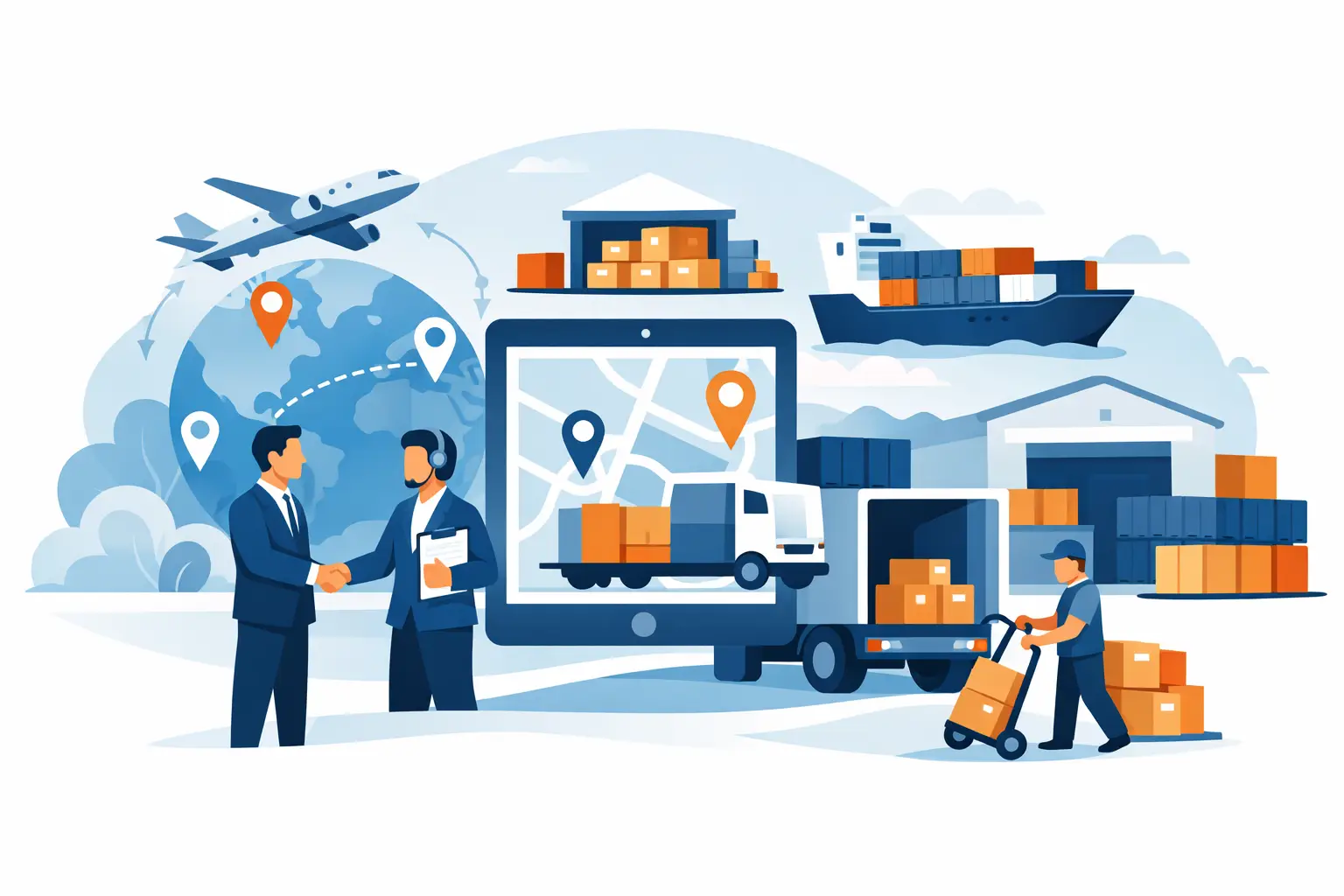
The term is often used too narrowly. Some businesses hear it and think of transport only. In practice, outsourced logistics services can cover same-day delivery, scheduled transport, warehousing, stock handling, pick and pack, fulfilment, returns, route planning, carrier coordination and, at a more strategic level, full supply chain oversight.
That range matters because many operational problems do not sit in one place. Delays may stem from poor warehouse flow rather than a lack of drivers. Rising delivery costs may be linked to fragmented carrier management. Service failures may come from weak stock visibility rather than transport capacity. A capable logistics partner looks at the full movement of goods, not just the final handoff.
For some businesses, the right model is straightforward outsourced transport. For others, it means combining warehousing and distribution under one provider. Larger or more complex operations may need 4PL support, where a logistics partner takes on a coordination role across multiple providers, sites and service layers.
Why businesses move to outsourced logistics services
The most common trigger is growth. A business that could once manage deliveries in-house with a small team, limited storage and a simple carrier mix starts to hit friction. Order volumes rise, service windows tighten and customers expect better tracking, faster turnaround and fewer errors.
At that point, building everything internally can become expensive and slow. Vehicles, warehouse space, staffing, systems and compliance all require investment. That investment may be justified for some organisations, but not for every business at every stage.
Outsourcing gives access to established infrastructure and operational expertise without the same fixed overhead. It can also improve speed to execution. Instead of spending months building capacity, companies can move more quickly with a partner that already has the people, fleet, warehousing processes and reporting structure in place.
There is also a risk management angle. Logistics operations are vulnerable to seasonal peaks, labour shortages, fuel volatility, service disruptions and changing customer demand. A strong outsourced model helps spread that risk through scalable resource, broader network coverage and better contingency planning.
The real benefits – and where they show up
Cost is part of the conversation, but it is rarely the whole story. The stronger case for outsourcing often sits in performance and control.
A good provider can improve delivery consistency because transport planning, route management and operational oversight are handled by a team focused on execution every day. Warehousing accuracy can improve when inventory handling follows structured processes with tighter stock visibility. Customer experience benefits when fulfilment and delivery run with fewer gaps between systems, people and handovers.
Scalability is another major advantage. Peak periods, promotional surges and market expansion place pressure on logistics quickly. Internal operations do not always flex well under that strain. Outsourced support gives businesses a way to add capacity without rebuilding the whole operation each time demand shifts.
There is also value in simplification. Many operations teams are spending too much time chasing carriers, solving stock issues, managing overflow storage and dealing with fragmented suppliers. Bringing more of that activity under one dependable logistics partner reduces operational noise and creates clearer accountability.
For businesses with environmental targets, outsourced logistics services may also offer a practical route to lower-emission delivery. Access to electric fleet options and more efficient route planning can support sustainability goals without requiring immediate fleet investment.
Where outsourcing needs careful thought
Outsourcing is not automatically the right choice in every scenario. If a business has highly specialised delivery requirements, unusual handling needs or a deeply integrated in-house operation that performs well, moving to an external model may not deliver enough benefit to justify change.
Control is another concern, and a fair one. Some decision-makers worry that outsourcing creates distance from the customer experience. That risk is real if the provider works as a disconnected supplier rather than an extension of the operation. It is much lower when service levels, reporting, escalation processes and communication standards are clearly defined from the outset.
There can also be a transition period. Onboarding stock, aligning systems, mapping routes, defining workflows and setting responsibilities take work. Businesses that expect an instant fix without proper implementation often create the very disruption they hoped to avoid.
The practical lesson is simple: outsourced logistics services work best when they are planned as an operating model, not purchased as a quick patch.
How to assess if your business is ready
A useful starting point is to look at the pressure points inside the current setup. Are deliveries becoming harder to manage during peak? Is warehouse space limiting sales growth? Are service issues appearing because different providers are not aligned? Is the operations team spending too much time firefighting?
If the answer is yes to several of those questions, the business may already be paying the hidden cost of keeping logistics in-house or spread too thinly across multiple suppliers.
It is also worth looking at demand patterns. Businesses with variable order volumes, rapid expansion plans or national delivery requirements often benefit most from flexible outsourced support. By contrast, businesses with stable local demand and simple distribution needs may need a lighter outsourced model rather than a full-service arrangement.
The right scope depends on the objective. Some firms need delivery capacity. Others need storage, fulfilment and transport in one coordinated service. Some need a strategic partner that can manage complexity across the wider supply chain. Clear objectives lead to better provider selection and better results.
What to look for in a logistics partner
Capability matters, but fit matters just as much. A provider should have the operational range to support where the business is now and where it expects to be in twelve to twenty-four months.
That means looking beyond headline services. Ask how warehouse operations are managed. Ask how inventory visibility is maintained. Ask what happens when same-day demand spikes or routes need to be reworked at short notice. Ask how performance is reported, how issues are escalated and how continuity is protected if one part of the operation comes under strain.
It is also sensible to look for breadth. A partner that can support transport, warehousing, fulfilment and multi-provider coordination is often better placed to remove friction across the supply chain. That does not mean every business needs every service, but it does mean future growth is less likely to outpace the model.
For UK businesses, national reach and dependable response times are especially important. If customer expectations rely on speed, the logistics partner must be built for execution, not just administration.
Sustainability should also be assessed in practical terms. Electric fleet capability, route efficiency and lower-emission delivery options matter most when they support service quality rather than compete with it. Businesses should not have to choose between greener operations and dependable performance.
Outsourced logistics services as a growth decision
The strongest outsourced logistics arrangements do more than move goods from one point to another. They remove friction, increase visibility and give businesses room to scale with confidence. That is a commercial advantage, not just an operational one.
When logistics is working properly, stock flows more predictably, delivery promises become easier to keep and internal teams can focus on sales, service and planning instead of daily disruption. That shift is often what makes outsourcing worthwhile.
For companies that need a dependable mix of transport, warehousing, fulfilment and strategic coordination, a partner such as NR Logistics can provide the flexibility to grow without losing control of service quality.
The key is not to ask whether outsourcing is cheaper in the short term. The better question is whether your logistics model is strong enough for the business you are trying to build next.