
What Is the Difference Between Warehousing and Inventory Management?

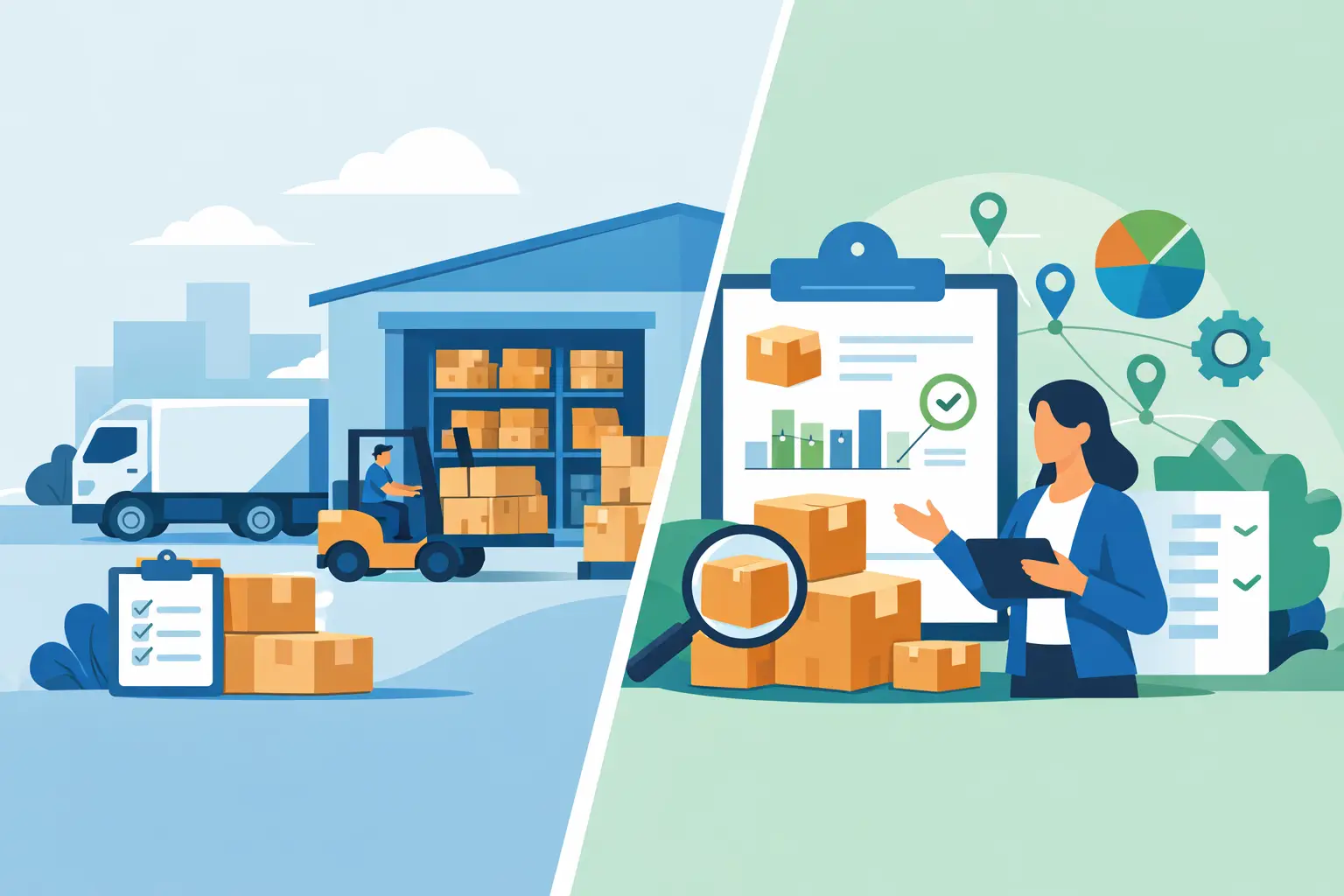
When stock starts going missing, orders go out late, or storage costs creep up, one question tends to surface quickly: what is the difference between warehousing and inventory management? For many growing businesses, the two get grouped together. In practice, they solve different operational problems, and understanding that difference can have a direct impact on fulfilment speed, stock accuracy and cost control.
Warehousing is about the physical handling and storage of goods. Inventory management is about knowing what stock you have, where it is, how fast it is moving and when action is needed. They work together, but they are not interchangeable. If one is underperforming, the other usually feels the strain.
What is the difference between warehousing and inventory management?
At the simplest level, warehousing deals with space, movement and handling inside a storage facility. It covers receiving goods, unloading vehicles, putting stock away, storing it safely, picking orders, packing and preparing items for dispatch. It is the operational environment where products are physically managed.
Inventory management deals with stock visibility and control. It focuses on quantities, locations, reorder points, stock status, forecasting and availability. Its job is to make sure the right products are in the right place at the right time without tying up unnecessary capital in excess stock.
A warehouse can be busy, organised and well run, but if inventory data is inaccurate, the business still faces stockouts, overselling and delayed fulfilment. Equally, inventory planning can be sound on paper, but if warehouse processes are weak, stock can be misplaced, damaged or dispatched incorrectly. Reliable supply chain performance depends on both.
Warehousing is the physical side of stock control
Warehousing is the infrastructure and day-to-day operation behind stored goods. That includes the building itself, racking, goods-in processes, storage methods, picking routes, packing stations, returns handling and outbound dispatch. It is where stock lives and where customer orders are physically turned into shipments.
For e-commerce businesses, retailers and courier networks, warehouse performance affects service levels in very practical ways. If incoming deliveries are booked in slowly, stock may appear unavailable even when it has arrived. If storage locations are not clearly managed, pickers lose time. If packing and dispatch are inconsistent, delivery targets become harder to meet.
A strong warehousing operation creates order, speed and accountability. It reduces handling errors, protects goods from damage and supports efficient throughput during peak periods. That matters even more when volumes fluctuate or when service expectations are tight, which is often the case in UK fulfilment and distribution.
Warehousing also has a cost dimension. Storage space, labour, equipment and transport coordination all need to be managed carefully. More warehouse space is not always the answer. Sometimes the issue is poor layout, slow handling or stock that should not be sitting in storage in the first place.
Inventory management is the decision-making layer
If warehousing is about where stock is and how it moves physically, inventory management is about what should happen next. It gives businesses control over stock levels, replenishment timing and product availability.
That includes tracking how much stock is on hand, how much is committed to orders, what is due in, what is ageing and what is moving too slowly or too quickly. It also includes setting reorder thresholds, reducing dead stock and planning around demand patterns.
This is where many businesses either protect margin or erode it. Too much stock ties up cash, increases storage costs and creates risk if products become obsolete or seasonal demand shifts. Too little stock affects service levels, customer satisfaction and revenue. Good inventory management balances those pressures rather than treating stock as a simple count of units.
For growing businesses, inventory management becomes more complex when stock is spread across channels, suppliers or locations. A product might be available in one warehouse but not another. Stock may be allocated to online orders while wholesale demand is rising. Without clear visibility, businesses make slower decisions and often more expensive ones.
Why the difference matters in day-to-day operations
The distinction between warehousing and inventory management is not just technical language. It affects how businesses diagnose problems and where they invest.
If order accuracy is poor, the cause might be a warehouse picking issue. If best-selling lines keep running out despite strong demand history, the problem is more likely inventory planning. If stock records show availability but items cannot be found quickly, the issue sits between the two: inventory data and warehouse discipline are no longer aligned.
This is why businesses that treat warehousing as simply rented space often run into avoidable problems. Storage alone does not create control. In the same way, software alone does not create fulfilment performance if physical handling processes are inconsistent.
For operations managers and procurement leads, the real goal is joined-up execution. Stock should be visible in the system and accessible in the warehouse. Goods should be received accurately, stored logically and dispatched on time. When those pieces work together, businesses gain reliability, not just capacity.
Where warehousing and inventory management overlap
Although they are different functions, they depend heavily on each other. Goods-in is a good example. When stock arrives, the warehouse team receives and stores it, but the inventory system must also be updated correctly. If either side fails, stock records become unreliable from the start.
Order fulfilment works the same way. Inventory management confirms what is available to sell. Warehousing ensures those items are picked, packed and loaded accurately. Returns handling also crosses both areas. Returned stock has to be physically inspected and processed, but it also needs the correct inventory status so it can be resold, quarantined or written off.
This overlap is where a lot of operational value sits. Businesses do not just need a place to hold stock. They need confidence that physical stock and stock data match, especially when delivery promises are tight and customer expectations are high.
Common misconceptions that cause problems
One common assumption is that warehousing automatically includes strong inventory control. Sometimes it does, but not always. A provider may offer storage and handling without delivering the level of stock visibility, reporting or replenishment support a business needs.
Another misconception is that inventory management is purely administrative. In reality, it has direct commercial impact. It shapes purchasing, cash flow, customer service and warehouse efficiency. If inventory is poorly managed, warehouse space fills with the wrong products while priority stock becomes harder to access or unavailable altogether.
There is also a tendency to think these functions only matter at large scale. Smaller merchants feel the effects just as quickly. A limited product range can still create fulfilment delays, overselling and unnecessary storage costs if stock processes are weak. In fact, when resources are tighter, mistakes are often felt faster.
Choosing the right support for your operation
If a business is reviewing outsourced logistics support, it helps to separate what it needs from what it assumes it needs. Some operations require straightforward warehousing with reliable inbound and outbound handling. Others need fuller inventory oversight, including live stock visibility, reporting, order integration and replenishment support.
The right setup depends on volume, sales channels, SKU complexity and service expectations. A fast-moving e-commerce brand with seasonal peaks may need agile warehouse operations and close stock monitoring. A courier or distribution business may place greater emphasis on throughput, staging and time-sensitive dispatch. Many businesses need both, especially as they scale.
This is where an experienced logistics partner can make a practical difference. Rather than treating warehousing as a static storage function, the stronger model is to connect storage, stock control and distribution into one reliable operation. That gives businesses more visibility, fewer handover issues and better continuity across the supply chain.
NR Logistics supports that joined-up approach by combining warehousing, inventory services and wider distribution capability, helping businesses scale without losing operational control.
What good looks like
Good warehousing means stock is handled safely, stored efficiently and dispatched accurately. Good inventory management means stock levels are visible, decisions are timely and supply matches demand as closely as possible. Together, they create a supply chain that is easier to manage and more dependable under pressure.
If your business is asking whether it has a storage problem or a stock control problem, the answer may be both. But once you understand what each function is responsible for, it becomes much easier to fix the right issue, improve service performance and build a supply chain that supports growth rather than slowing it down.
The most useful question is not whether warehousing or inventory management matters more. It is whether your operation can rely on both when order volumes rise, customer expectations tighten and every missed movement starts to cost more.