
Warehousing and Inventory Management That Works

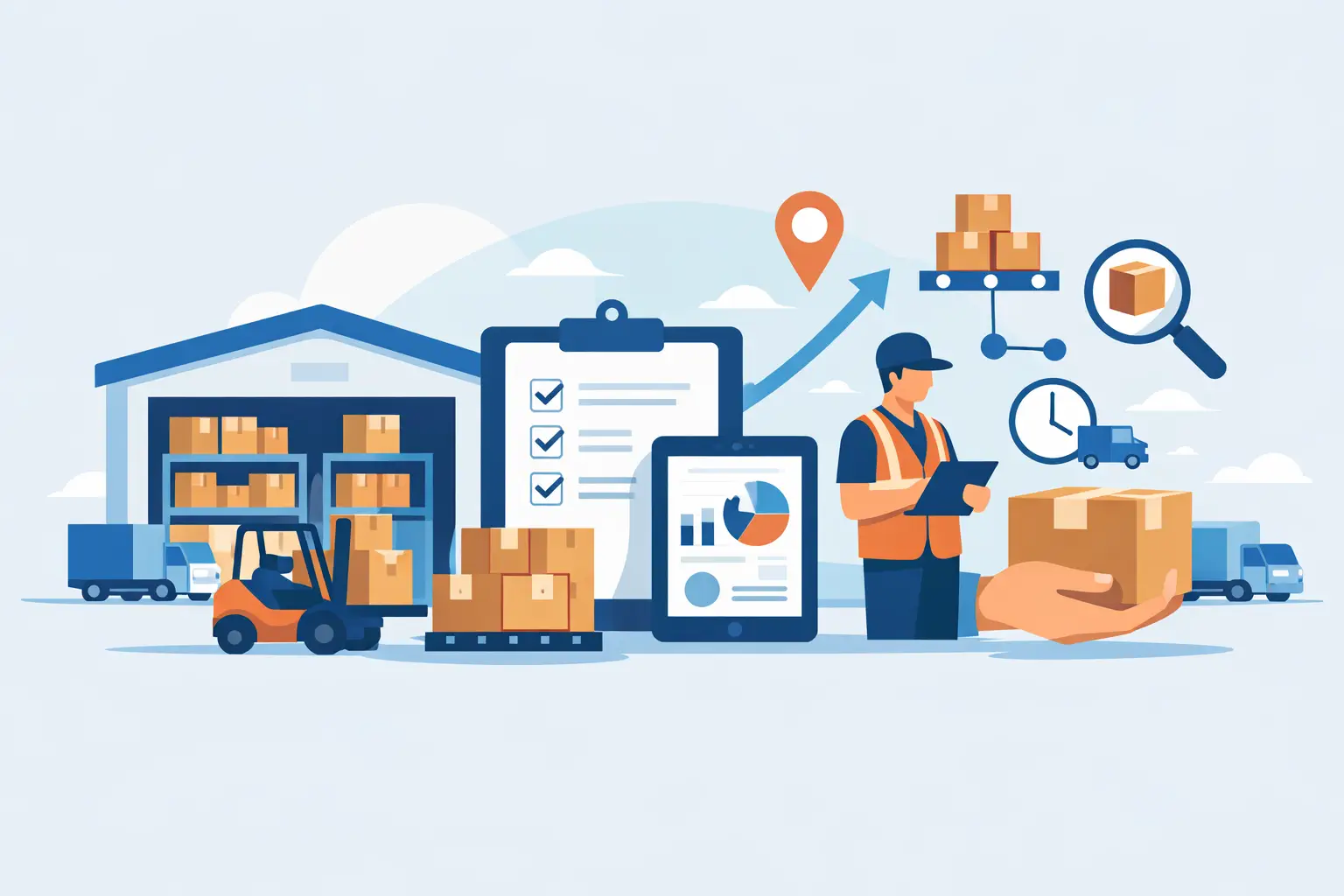
Stock problems rarely start on the shelf. They start earlier – with poor visibility, inconsistent processes, delayed putaway, inaccurate counts, or a warehouse layout that no longer fits demand. That is why warehousing and inventory management matter so much for growing businesses. When both work together, orders move faster, stock records stay accurate, and customer service becomes easier to protect even during busy periods.
For UK businesses dealing with fast-moving stock, seasonal spikes, or time-sensitive delivery windows, the warehouse is not just a storage space. It is an operating centre that affects fulfilment speed, labour efficiency, transport planning, and margin control. If inventory is not managed properly, the result is usually the same – overselling, back orders, avoidable carrying costs, and pressure across the whole supply chain.
Why warehousing and inventory management must work together
Warehousing and inventory management are often discussed as separate functions, but in practice they depend on each other. Warehousing is about how goods are received, stored, handled, picked, packed, and dispatched. Inventory management is about knowing what stock you have, where it is, how quickly it moves, and when it needs replenishment. One controls physical flow. The other controls stock accuracy and decision-making.
If one side is strong and the other is weak, problems appear quickly. A well-run warehouse without accurate inventory data still leads to missed picks and unreliable availability. Accurate stock records without disciplined warehouse processes create delays, congestion, and handling errors. Businesses that treat both as a single operational system tend to perform better because every movement is matched by clear, current information.
That matters even more for companies managing multi-channel fulfilment. Selling through wholesale, marketplace, and direct-to-consumer channels puts pressure on stock allocation and turnaround times. Without joined-up warehouse operations and inventory control, small errors can spread across every order stream.
What good warehouse performance actually looks like
A dependable warehouse operation is not just tidy and well organised. It gives the business control. Goods are booked in quickly, discrepancies are flagged early, stock is stored in the right locations, and orders are picked accurately without wasting time on unnecessary movement.
In practical terms, strong warehouse performance usually comes down to consistency. Standard receiving procedures reduce errors at the door. Logical bin locations make stock easier to find. Clear picking rules reduce mis-picks. Disciplined dispatch processes help goods leave on time with the right documentation and carrier handover.
Layout also plays a bigger role than many businesses expect. Fast-moving lines should be easier to access than slower stock. Bulky products need space that does not disrupt core picking routes. Returns should not block inbound operations. There is no single layout that suits every business, which is why warehouse design needs to reflect stock profile, order volume, and handling requirements rather than generic best practice.
The inventory side: accuracy, visibility and control
Inventory control is where service levels and cash flow often meet. Too much stock ties up working capital and storage space. Too little stock creates missed sales and rushed replenishment. The right balance depends on demand patterns, supplier lead times, and how much volatility the business can absorb.
Accurate stock visibility is the starting point. That means knowing not only total stock on hand, but also what is available to sell, what is allocated, what is damaged, and what is sitting in returns or quarantine areas. If those distinctions are not clear, stock figures can look healthy on paper while fulfilment teams struggle to complete orders.
Cycle counting is one of the most effective ways to protect accuracy. Instead of relying only on occasional full stocktakes, regular counts of selected lines help identify discrepancies early. This reduces disruption and makes it easier to find the cause of errors, whether that is receiving mistakes, picking issues, poor location discipline, or damaged stock not recorded correctly.
Forecasting matters too, but it is rarely perfect. Businesses with stable demand can plan inventory with more confidence. Businesses affected by promotions, weather, retail events, or channel volatility need more flexibility. In those cases, safety stock may be necessary, but it should be based on actual risk rather than guesswork.
Where businesses usually lose time and money
Most warehousing issues do not come from one major failure. They come from small inefficiencies repeated every day. Staff walking too far to pick popular lines. Deliveries arriving without a clear booking process. Stock being put into temporary locations and never properly updated. Orders waiting because one missing item cannot be found quickly.
These issues create cost in different ways. Labour productivity drops. Dispatch cut-off times become harder to meet. Customer service teams spend more time dealing with avoidable queries. Transport planning becomes less reliable because outbound volumes are uncertain until too late in the day.
There is also a strategic cost. If management cannot trust stock accuracy or warehouse throughput, decision-making slows down. Procurement becomes more cautious. Sales teams make promises they cannot support with confidence. Growth starts to put strain on operations instead of creating momentum.
Technology helps, but process comes first
Warehouse systems and inventory tools can improve visibility, traceability, and speed, but they are not a fix for weak discipline. A business can invest in scanning, reporting dashboards, and stock control software and still struggle if receiving, putaway, and picking processes are inconsistent.
The best results usually come when technology supports clear operational rules. Barcode scanning improves accuracy when every movement is recorded properly. Real-time stock visibility supports better planning when locations are maintained correctly. Reporting adds value when teams know which measures actually affect service and cost.
For some businesses, a lighter system is enough. For others, especially those with larger SKU ranges, multiple sales channels, or high daily order volumes, deeper system integration becomes more important. The right level depends on complexity. Overcomplicating a simple operation can be as unhelpful as underinvesting in a growing one.
Outsourcing warehousing and inventory management
For many businesses, outsourcing makes commercial sense. Running warehouse space, labour, systems, compliance, and transport coordination in-house can become expensive and difficult to scale. An outsourced model can provide the capacity and operational structure needed to improve service without the fixed cost of building everything internally.
That said, outsourcing is not only about saving space. It is about gaining reliability, flexibility, and visibility. A capable logistics partner should be able to handle fluctuations in volume, maintain stock accuracy, support faster order turnaround, and provide reporting that helps the client stay in control.
The fit matters. A growing e-commerce business may need fast pick-and-pack, returns handling, and delivery integration. A courier operator may need dependable overflow warehousing and timed dispatch support. A wholesale distributor may care more about pallet handling, stock rotation, and scheduled replenishment. The warehouse model should reflect the operation it supports.
This is where an end-to-end provider can add real value. When warehousing, inventory control, and transport planning are aligned, businesses avoid the handover gaps that often create delay and confusion. NR Logistics works in that space, helping businesses simplify movement, storage, and fulfilment through one dependable operational partner.
How to assess whether your current setup is fit for purpose
A simple question is often enough to expose a weak setup: can you trust your stock position at any point in the day? If the answer is no, there is a control issue somewhere in the process. That could sit in goods-in, location management, order handling, returns, or system discipline.
It also helps to look at service pressure points. Are same-day or next-day orders difficult to process consistently? Are stock discrepancies rising as order volumes grow? Is labour spend increasing without a matching improvement in throughput? If so, the issue is not just volume. It is likely a process and layout problem that will continue to grow with demand.
Businesses should also consider resilience. Can the operation handle seasonal peaks, promotional spikes, or unexpected inbound delays without losing control? A setup that works only in normal conditions is not as dependable as it looks.
Building a stronger operation over time
The most effective warehousing and inventory management improvements are usually practical rather than dramatic. Better slotting. Clearer receiving checks. More regular cycle counts. Tighter returns procedures. Better reporting on stock movement and picking accuracy. Small improvements in these areas often produce measurable gains in service and cost control.
What matters is building an operation that can scale without becoming fragile. That means processes that are repeatable, stock data that can be trusted, and warehouse capacity that supports growth rather than limiting it. For businesses under pressure to move faster while keeping costs under control, that balance is not optional. It is what keeps fulfilment dependable.
When the warehouse runs with accuracy and intent, the rest of the supply chain becomes easier to manage. Orders move with less friction, stock decisions improve, and customers see the result where it matters most – in consistent service they can rely on.