
How to Manage Delivery Exceptions Without Delay

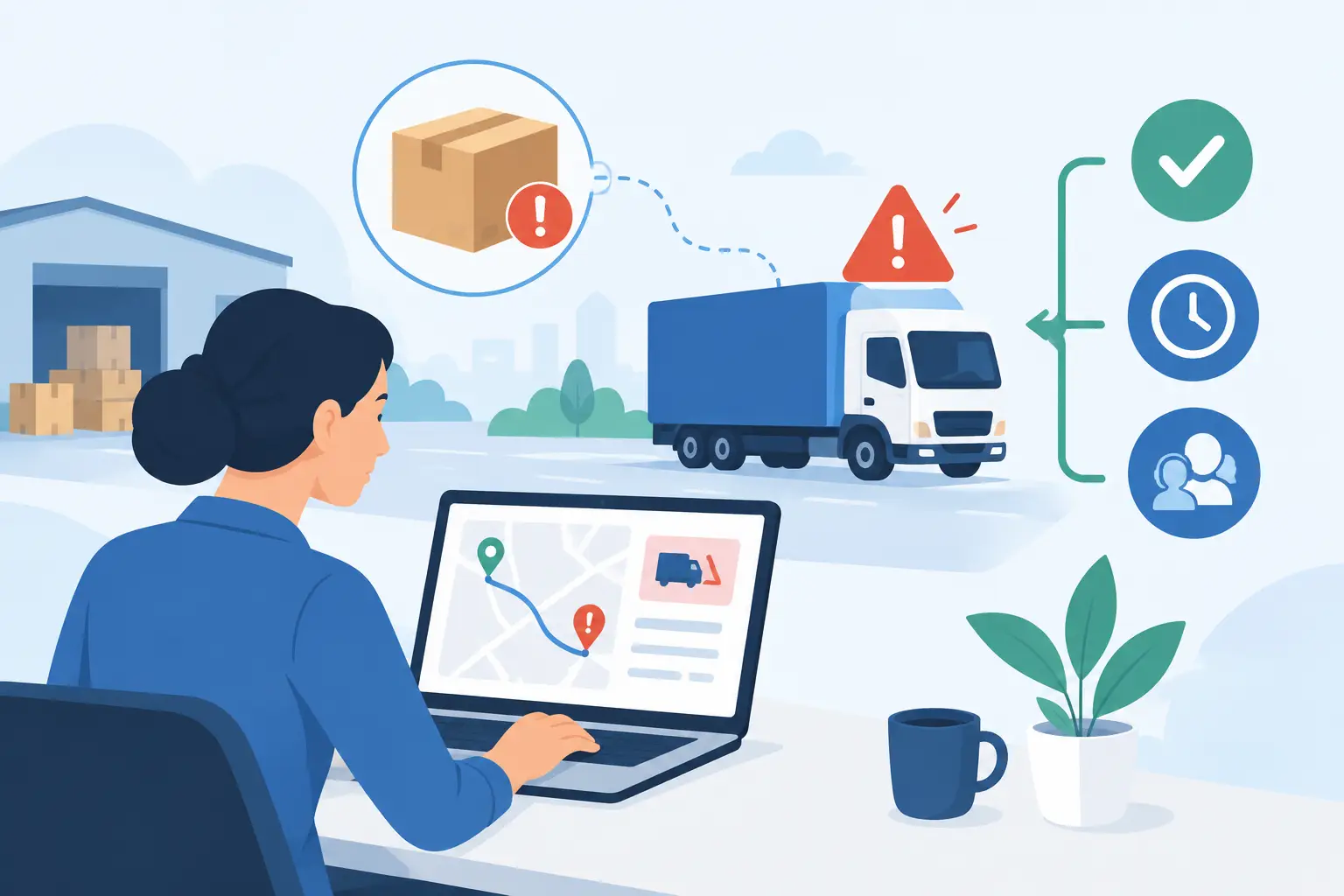
A missed delivery slot, an incomplete address or a vehicle breakdown can quickly become more than a transport issue. For your customer, it may mean stock unavailable for sale, a delayed production run or a promise that has not been kept. To manage delivery exceptions effectively, businesses need more than driver updates and reactive calls. They need a clear operational process that identifies risk early, assigns ownership and protects the final customer experience.
For UK businesses operating fast-moving e-commerce, retail, courier or B2B supply chains, exceptions will happen. Traffic congestion, weather disruption, site restrictions, failed collections and incorrect order data cannot always be eliminated. What separates dependable operations from costly disruption is how quickly the issue is understood, communicated and recovered.
What counts as a delivery exception?
A delivery exception is any event that prevents a consignment from following its planned journey or arriving within the agreed delivery window. Some exceptions are visible immediately, such as a failed delivery attempt. Others emerge earlier in the process, when a collection is missed, stock is not ready, a route is delayed or delivery instructions do not match the site requirements.
The most common causes include an unavailable recipient, access problems, inaccurate addresses, damaged goods, vehicle issues, adverse weather, traffic incidents and delays at depots or loading sites. For B2B deliveries, exceptions can also arise when a booking reference is missing, a receiving site has limited opening hours or a vehicle arrives without the required paperwork.
Not every exception has the same commercial impact. A parcel delayed by a day may be manageable for one customer, while a late pallet of parts can stop an entire production line. Your response should reflect the value, urgency and downstream effect of the shipment.
Why delivery exception management matters
Poorly handled exceptions create avoidable cost. Teams spend time chasing updates, arranging redeliveries, processing claims and responding to customer complaints. Repeated failures also damage confidence in your business, even where the root cause sits elsewhere in the supply chain.
A structured approach improves more than delivery performance. It gives operations teams a clearer view of recurring problems, whether that is address quality, warehouse handover delays, a particular delivery area or limited carrier capacity during peak periods. Over time, this insight helps reduce repeat failures and makes planning more accurate.
For growing businesses, the challenge is often scale. A process that works when handling 20 orders a day may fail when volumes rise to 2,000. Manual spreadsheets, disconnected carrier portals and unclear escalation routes create blind spots precisely when service pressure is highest.
Build a clear process to manage delivery exceptions
The best exception process is simple enough for teams to follow under pressure. It should define how an issue is detected, who owns it, what action is required and when the customer needs an update.
Detect issues before the delivery window closes
Real-time tracking is valuable because it allows teams to act while recovery is still possible. If a vehicle is running behind schedule, a proactive message and revised arrival time may prevent a failed handover. If a driver cannot access a site, the customer can provide an alternative contact or entry instruction before the vehicle has to leave.
Tracking alone is not enough. Exception alerts should be prioritised according to service level and commercial impact. A same-day medical, retail replenishment or production-critical consignment requires immediate attention. A standard residential redelivery may follow a more routine workflow.
Set practical trigger points for action. For example, an uncollected consignment, a route delay beyond an agreed threshold or a failed delivery scan should create a visible task for the responsible team. The aim is to avoid discovering a problem only after the recipient has complained.
Give every exception one accountable owner
Shared visibility does not mean shared responsibility. When several teams can see a delivery issue but nobody has clear ownership, recovery slows down. Assign an individual or function to coordinate the response from start to finish.
That owner should have access to the information needed to make decisions: order details, delivery requirements, driver or carrier updates, customer contacts and any agreed service terms. They should also know when to escalate to warehouse, transport planning, customer service or a senior operations lead.
For organisations using multiple carriers, this is especially important. Each provider may use different tracking events, cut-off times and claims processes. A central control point brings those updates into one operational view and avoids customers being passed between suppliers.
Use recovery options that match the shipment
A failed attempt should not automatically lead to a standard redelivery. The right recovery route depends on the goods, the customer and the available capacity. A time-sensitive order may need a replacement vehicle, a revised delivery point or an upgraded same-day service. Lower-priority goods may be rebooked into the next practical delivery run.
Consider four questions before choosing the response:
- Is the consignment time-critical or linked to a customer promise?
- Can the recipient accept delivery at a different time or location?
- Is another vehicle, depot or carrier available to recover the service?
- Will the recovery cost be lower than the cost of a failed customer commitment?
This is where operational judgement matters. Premium recovery for every delayed order is expensive and not always justified. However, treating a high-value or business-critical delivery like a routine consignment can cost far more in lost revenue and customer trust.
Communicate early, clearly and with ownership
Customers are generally more understanding when they receive a clear update before a delivery fails. They are far less forgiving when they have to chase for information after a missed promise.
A useful exception update explains what has happened, what is being done and when the next confirmed update will be provided. Avoid vague messages such as “delayed due to operational issues”. If the new delivery time is not yet confirmed, say so directly and give a realistic time for the next contact.
For B2B customers, communication should reach the person who can act. A warehouse supervisor may need a revised booking slot; a procurement contact may need confirmation that a replacement shipment is on its way. The right message to the right person can prevent a delivery exception from becoming a wider service failure.
Strengthen the handover between warehouse and transport
Many delivery exceptions begin before a vehicle leaves the site. Incorrect labels, incomplete paperwork, late picking, poor packaging and missing delivery instructions all introduce avoidable risk into the transport operation.
Create a disciplined handover between fulfilment and transport teams. Orders should be checked against the delivery address, contact details, booking requirements, vehicle restrictions and service level before dispatch. For pallets and larger consignments, confirm whether the receiving location has equipment, access and a suitable unloading arrangement.
Accurate inventory also matters. If stock availability is wrong, a delivery may be promised before goods are ready to ship. Integrating warehousing, fulfilment and transport planning reduces these gaps and gives customers more reliable delivery commitments.
Measure the patterns, not just the incidents
An exception log should be used as an improvement tool, not simply a record of problems. Review the frequency, type and cost of exceptions over time. Look for concentration by customer, postcode area, carrier, route, product type, warehouse shift or day of the week.
Useful measures include first-attempt delivery success, on-time delivery performance, number of exceptions per 100 consignments, average time to resolve an issue, redelivery rate and customer complaints linked to transport. It is also worth tracking the proportion of exceptions caused by internal processes versus external disruption.
The data should lead to action. Repeated address issues may require better checkout validation. Regular failed deliveries to a commercial site may call for revised booking procedures. Persistent route delays may indicate that collection cut-offs, delivery zones or capacity plans need to change.
Plan for disruption before peak demand arrives
Exception management is most effective when it is prepared in advance. Peak trading, seasonal weather, bank holidays and promotional campaigns all place extra pressure on warehouse and delivery networks. Waiting for volumes to rise before defining escalation routes creates unnecessary risk.
Agree capacity plans, alternative transport options and communication responsibilities before busy periods. Review which customers need priority treatment and which orders can be consolidated or moved to a different service level if capacity tightens. Electric fleet options can also support reliable urban distribution where low-emission zones and sustainability targets influence route planning.
A dependable logistics partner should bring practical control to these moments: visibility across collections, warehousing and final-mile delivery; flexible capacity when plans change; and a recovery process built around the needs of your customers. NR Logistics supports businesses with that wider operational view, helping turn delivery disruption into a managed response rather than an uncontrolled cost.
The goal is not to promise that every delivery will be problem-free. It is to ensure that when an exception occurs, your team knows what to do next, your customer receives a credible answer and your supply chain keeps moving.