
What Do You Mean by Warehouse Management?

When a customer order is late, incomplete or sent to the wrong address, the problem often starts long before the van leaves the depot. That is why businesses asking what do you mean by warehouse management are usually really asking something bigger – how do we keep stock accurate, orders moving and service levels under control as demand grows?
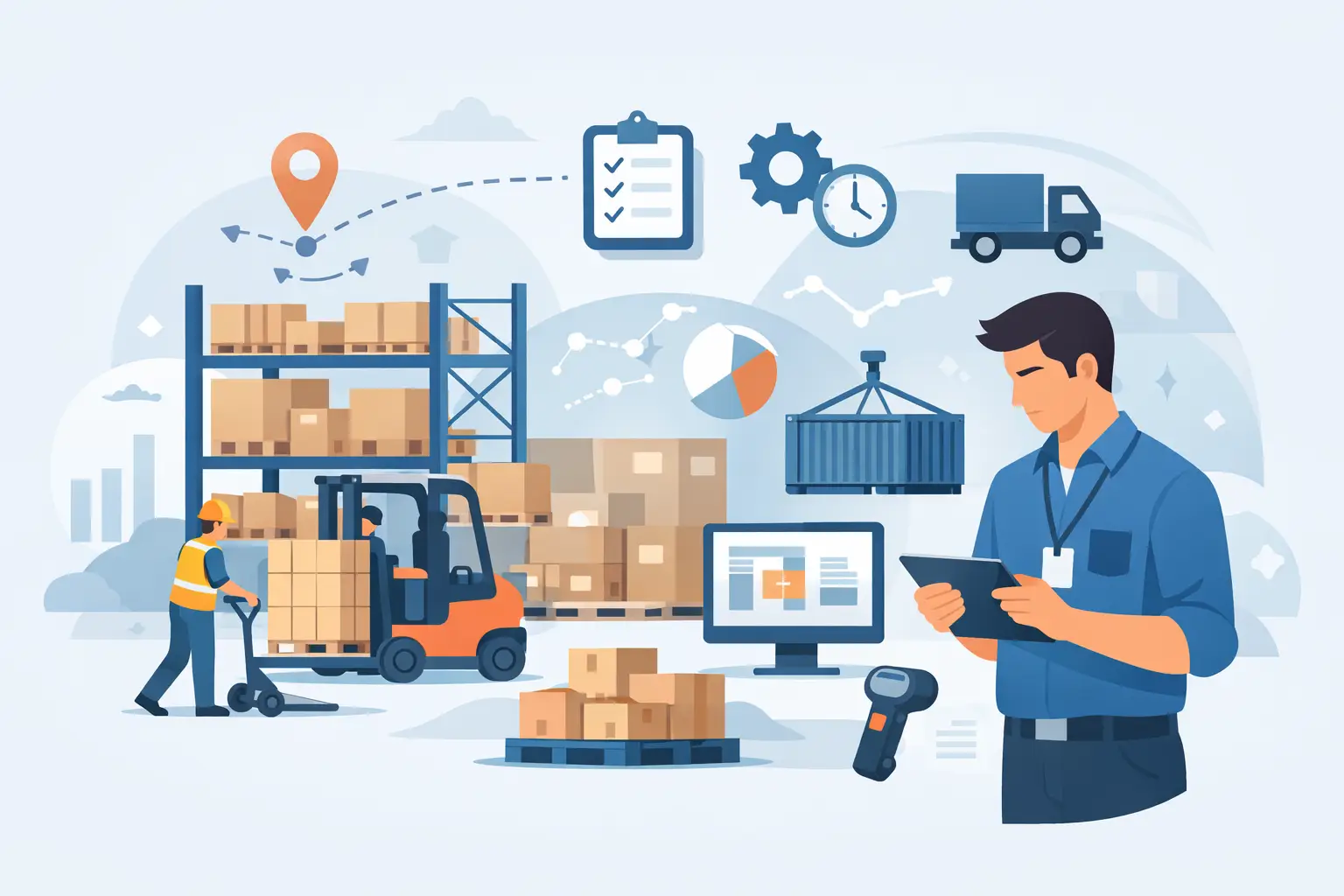
Warehouse management is the day-to-day control of goods, people, storage space and processes inside a warehouse. It covers how stock is received, checked, put away, stored, counted, picked, packed and dispatched. At a basic level, it is about knowing what you have and where it is. At a commercial level, it is about protecting margin, maintaining delivery performance and making sure the warehouse supports the wider supply chain rather than slowing it down.
What do you mean by warehouse management in practice?
In practice, warehouse management is not just shelving goods neatly or keeping a building full of stock. It is the system and discipline that keeps products flowing through the operation in the right order, at the right time and with the right level of accuracy.
For a growing e-commerce business, that might mean receiving inbound pallets in the morning, breaking them down into pick locations, processing hundreds of small orders throughout the day and preparing late cut-off dispatches for carrier collection. For a courier or distribution operator, it might involve cross-docking, temporary storage, route staging and strict scanning procedures to maintain visibility.
The key point is that warehouse management connects stock control with customer service. If the warehouse is poorly managed, stock records drift, pick errors rise, labour is wasted and delivery promises become harder to keep. If it is well managed, the business gains control, speed and consistency.
The core parts of warehouse management
Most warehouse operations rely on the same core functions, even if the scale and complexity differ.
Goods receipt is the starting point. Products arriving at the warehouse need to be checked against purchase orders or delivery documentation, inspected for damage and booked into stock correctly. If errors happen here, they carry through the whole operation.
Putaway follows. This means moving incoming stock into the right storage location based on product type, turnover speed, size or handling requirements. Fast-moving lines should usually sit in the most accessible pick faces, while slower stock can be held further back. Good putaway reduces travel time and improves picking efficiency.
Storage is more strategic than it sounds. It is not just about where items fit. It is about using warehouse space in a way that protects stock, supports safe handling and allows efficient movement. A warehouse packed without a clear plan often creates congestion, delays and avoidable damage.
Order picking is where service performance becomes visible. Pickers need clear instructions, accurate stock locations and a layout that allows them to move quickly without creating mistakes. The right picking method depends on the business. Single-order picking may suit low volume, while batch, zone or wave picking can support higher throughput.
Packing and dispatch complete the process. Orders must be checked, packed securely, labelled correctly and handed over to the right delivery channel. This stage matters just as much as picking. Strong dispatch control helps prevent missed collections, incorrect labelling and customer complaints.
Stock counting runs through the background of all of this. Regular cycle counts and reconciliations help maintain inventory accuracy without waiting for a full stocktake. If your system says an item is available but the shelf is empty, the cost is immediate.
Why warehouse management matters to business performance
Warehouse management is often treated as an operational detail until problems start hitting sales, customer retention or cash flow. In reality, it affects all three.
Accurate warehouse control reduces overselling and stockouts. It helps purchasing teams make better decisions because stock data is more reliable. It also reduces the need for costly emergency fulfilment fixes, such as split shipments or urgent replenishment moves.
It also has a direct impact on labour cost. In many warehouses, travel time, rework and avoidable searching are some of the biggest hidden inefficiencies. When locations are logical, processes are clear and stock records are dependable, teams spend more time moving orders out and less time correcting issues.
Customer experience is closely tied to warehouse performance too. Fast dispatch means little if the wrong item arrives. Equally, a premium product can still disappoint if it is packed poorly or delayed because stock was not where the system said it would be. For B2B customers, these errors can affect their own service commitments downstream.
Then there is scalability. A process that works for 50 orders a day can fail completely at 500. Warehouse management creates the structure needed to grow without losing control. That may involve better slotting, improved scanning, stronger replenishment routines or more advanced system support.
Warehouse management systems and manual control
When people ask what do you mean by warehouse management, they sometimes mean the software rather than the function. A warehouse management system, or WMS, is a digital tool used to track stock, manage locations, guide picking and improve visibility across warehouse activity.
A WMS can be highly effective, but software alone does not fix weak processes. If goods are booked in carelessly or staff bypass scanning steps, the data quickly becomes unreliable. Good warehouse management comes from a combination of system control, trained teams and disciplined execution.
For smaller businesses, manual methods or simpler stock platforms can work up to a point. The trade-off is usually visibility and control under pressure. As order volume, SKU count or client complexity increases, manual workarounds become harder to sustain. More administration is needed, more exceptions appear and reporting gets slower.
The right setup depends on the business model. A fast-moving fulfilment operation may need live stock visibility and barcode-led accuracy. A lower-volume specialist business may prioritise space usage and careful product handling. There is no one-size-fits-all model, but there is a common requirement: the warehouse must support reliable fulfilment.
Common warehouse management problems
Many warehouse issues look different on the surface but come back to the same underlying gaps.
Poor inventory accuracy is one of the most common. This often comes from rushed goods-in procedures, inconsistent scanning or stock moves that are not recorded properly. The result is lost time, cancelled orders and frustrated customers.
Inefficient layout is another. If fast-selling products are stored in awkward locations, pick times rise and congestion increases. A warehouse can be busy without being productive.
Labour planning also matters. Too few people creates delays and mistakes. Too many adds cost without improving output. Good warehouse management uses volume trends, order profiles and cut-off times to plan resources realistically.
Returns handling is often overlooked as well. For e-commerce and retail supply chains, returns are part of normal operations. If they are not inspected, booked and routed back into stock efficiently, value sits idle and stock files become distorted.
What good warehouse management looks like
A well-run warehouse is usually quiet in the right way. Not silent, but controlled. Goods are where they should be. Teams know the process. Exceptions are dealt with quickly. Stock records are trusted. Orders leave on time.
From a management point of view, good warehouse control means visibility. You should be able to see what stock is on hand, what is due in, what is committed to orders and where delays are developing. That visibility supports better decisions across purchasing, customer service and transport planning.
It also means adaptability. Demand changes. Product ranges expand. Seasonal peaks arrive. Customer expectations shift. Strong warehouse management gives a business the ability to respond without creating disruption across the wider operation.
For companies outsourcing warehousing, this is where the choice of partner matters. The provider is not just storing goods. They are handling a critical part of your customer promise. A dependable operator should be able to maintain stock accuracy, support efficient dispatch and scale capacity when volumes move. For businesses looking to simplify fulfilment and distribution, that level of control can make a measurable difference.
Warehouse management, then, is not simply about storage. It is about maintaining order, accuracy and flow so that the rest of the supply chain can perform with confidence. If your stock is valuable, your delivery deadlines matter and your customers expect consistency, warehouse management is not a back-room task. It is one of the clearest indicators of how well your operation is really running.
The useful question is not just what warehouse management means, but whether your current setup gives you enough control to grow without compromise.