
Same Day Delivery in the UK Explained

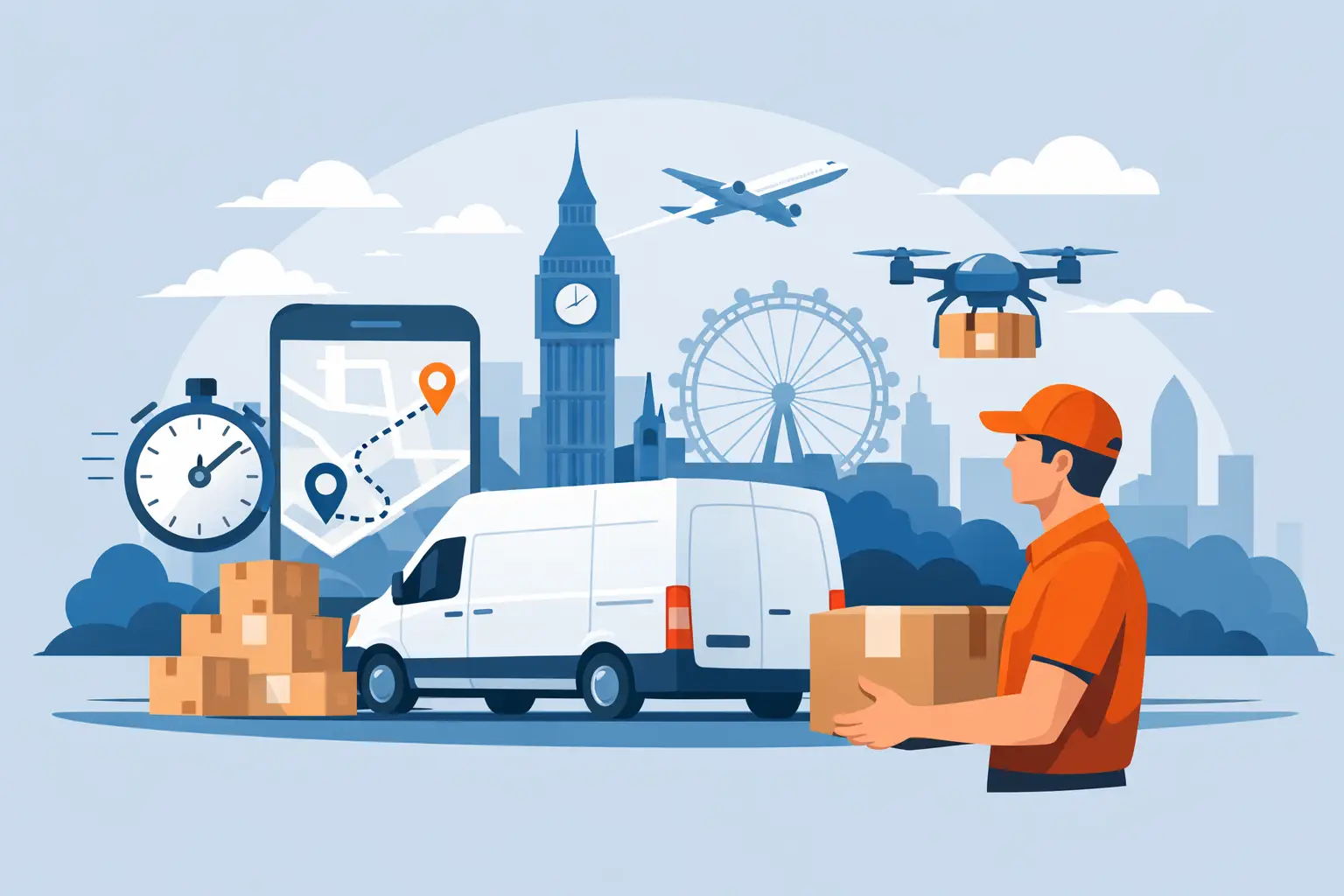
A missed delivery window can cost more than one sale. It can trigger cancelled orders, overloaded customer service teams, failed service level agreements, and pressure across the wider supply chain. That is why same day delivery in the UK has moved from a premium extra to a practical operational requirement for many businesses.
For e-commerce brands, courier networks, retailers, and time-sensitive suppliers, the question is no longer whether fast delivery matters. It is whether your delivery model can support it consistently, profitably, and at scale. Speed on its own is not enough. The real value comes from dependable execution, accurate stock positioning, and a logistics partner that can respond without creating more complexity elsewhere.
What same day delivery in the UK really means
Same day delivery sounds straightforward, but in practice it covers a range of operational models. In some cases, it means collecting goods from a warehouse or store and delivering them to the end customer within hours. In others, it means urgent business-to-business movement between sites, depots, or clients on the same working day.
That distinction matters. A same-day service for a single urgent consignment is different from a structured same-day network supporting regular fulfilment volumes. Businesses that rely on this service every day need more than a courier. They need reliable routing, flexible capacity, inventory accuracy, and clear visibility from collection through to proof of delivery.
For growing businesses, same day capability often becomes part of a wider fulfilment strategy. Stock needs to be stored in the right place, picked quickly, loaded accurately, and assigned to the right transport resource without delay. If one part of that chain slows down, the delivery promise becomes harder to keep.
Why businesses are investing in faster fulfilment
Customer expectations have changed, but commercial pressure is just as important. Fast delivery helps businesses protect revenue, improve service levels, and keep operations moving when timing is critical.
For online retailers, same-day options can reduce basket abandonment and support premium customer experiences in competitive categories. For courier operators and logistics providers, outsourced same-day capacity can help manage overflow, cover regional gaps, or maintain service continuity during peak periods. For manufacturers, wholesalers, and field service businesses, urgent delivery can prevent downtime and keep customers supplied without holding excess stock on site.
There is also a branding effect. Businesses that can deliver quickly and reliably are often seen as better organised and more responsive. That reputation matters, particularly when service levels influence repeat business or contract retention.
Still, the strongest case for same-day delivery is not marketing. It is resilience. When your supply chain can react quickly, you have more room to manage disruptions, urgent requests, or unexpected spikes in demand.
What affects same-day delivery performance
Speed depends on planning. The businesses that achieve strong same-day performance usually have the right structure behind the service, not just fast vehicles on standby.
Inventory placement is one of the biggest factors. If stock is too far from the customer, same-day delivery becomes expensive or unrealistic. Warehousing strategy, order cut-off times, and pick-and-pack efficiency all shape whether a same-day promise is workable.
Transport capacity is another variable. During peak trading periods, major promotions, or regional disruptions, businesses need access to flexible fleet support. Relying on a narrow transport model can create bottlenecks. A broader logistics setup gives more room to adapt.
Visibility matters too. Operations teams need to know what has been picked, what is in transit, and what has been delivered. Without that level of control, same-day delivery can place extra pressure on customer service and account management teams, especially when clients expect live updates.
Then there is geography. Same-day delivery in central urban areas is usually easier to support than rural or remote locations. That does not mean nationwide same-day delivery is impossible. It means the service needs to be designed around realistic route planning, local coverage, and carefully managed expectations.
The trade-off between speed, cost, and consistency
Every business wants fast delivery, but not every order justifies the same service level. One of the most common mistakes is treating same-day delivery as an all-or-nothing proposition.
For some businesses, it makes sense as a premium option for urgent orders or high-value customers. For others, it is a contractual requirement tied to operational deadlines. The right approach depends on order profile, margin, location spread, and service commitments.
Cost control becomes easier when same-day delivery is built into a wider logistics model. If transport, storage, and fulfilment are managed separately by different providers, speed often comes with duplication, delays, and weaker accountability. A more integrated model allows businesses to align stockholding, dispatch, and transport planning around actual demand.
Consistency should also carry more weight than headline speed. A promised same-day service that regularly fails creates more damage than a next-day offer delivered well. Businesses need delivery partners that understand this balance and can protect service quality while moving quickly.
When a logistics partner adds more value than a courier
There is a clear difference between booking a fast vehicle and building a dependable same-day operation. Businesses with regular delivery pressure usually need wider support than a point-to-point collection service can provide.
A logistics partner can help shape the conditions that make same-day delivery viable. That may include warehousing close to key markets, inventory handling, dispatch coordination, transport planning, and overflow support during busy periods. It can also include managing multiple providers within a broader supply chain framework so that service levels stay stable even as demand changes.
This is where the conversation shifts from courier procurement to operational strategy. If your business is scaling, serving multiple regions, or managing mixed order types, same-day delivery works best when it sits inside a joined-up fulfilment system.
That is particularly relevant for e-commerce businesses. Fast delivery promises depend on what happens before the vehicle leaves the site. If stock records are inaccurate or warehouse workflows are slow, the transport leg cannot solve the problem. The same applies to courier operators needing dependable subcontracted support. Speed has to be backed by process discipline.
Sustainability and same-day delivery are no longer separate issues
Some businesses still assume that faster delivery always comes at the expense of sustainability. In reality, the picture is more nuanced.
Poorly planned delivery routes and fragmented transport models do increase emissions. But a structured same-day operation can be improved through better route efficiency, consolidated local networks, and low-emission vehicles in the right areas. Electric fleet options are becoming increasingly relevant, especially for urban and regional deliveries where businesses want to reduce environmental impact without weakening service.
For procurement teams and operations leaders, that creates a more practical choice. The goal is not simply to move goods faster. It is to do so in a way that supports long-term efficiency, compliance expectations, and customer requirements around responsible supply chain practices.
Businesses are under growing pressure to prove that service improvements do not come with avoidable environmental costs. A logistics partner with both operational reach and sustainability options is better placed to support that balance.
How to assess if same-day delivery is right for your operation
The starting point is not what competitors offer. It is what your customers need and what your operation can support reliably.
Look at where your urgent orders come from, how often they occur, what they are worth, and what happens when delivery is delayed. If failed timing creates meaningful financial or service risk, same-day delivery may be commercially justified. If demand is more occasional, a flexible on-demand model might be more suitable than a fully embedded same-day service.
It is also worth assessing your current logistics structure. Are stock locations aligned with customer demand? Can your warehouse team pick and dispatch fast enough? Do you have enough transport capacity during peaks? Can you track consignments clearly and respond when plans change? These are operational questions, not just delivery questions.
For many businesses, the strongest solution is a scalable model rather than a fixed one. That could mean using same-day delivery for urgent orders, key accounts, or specific geographies while maintaining other service levels elsewhere. It could also mean working with a provider that can combine warehousing, fulfilment, transport, and multi-provider coordination under one operational framework.
NR Logistics supports that kind of approach by combining same-day transport capability with warehousing, fulfilment, and wider supply chain support, giving businesses more control without adding unnecessary layers.
The most effective same-day delivery model is the one that fits your operation, protects your service promises, and gives you room to grow. Fast is valuable, but reliable fast is what keeps customers, contracts, and supply chains moving.