
What Is Inventory Management in Warehouse?

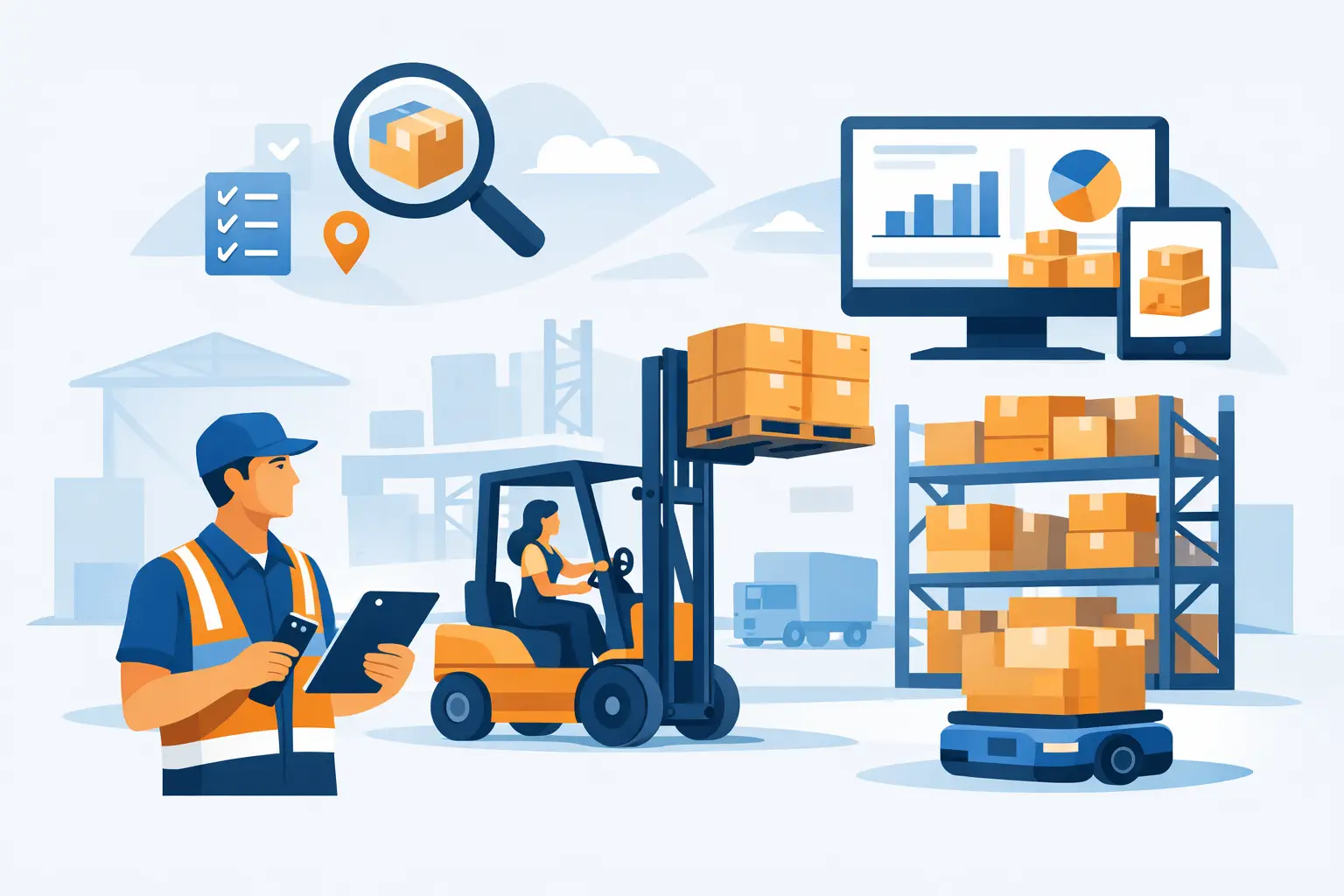
A warehouse can look busy, full, and productive while still leaking time and margin every day. Stock gets misplaced, replenishment is delayed, picking routes are inefficient, and orders go out with avoidable errors. That is why asking what is inventory management in warehouse operations is not a basic question. It is a commercial one.
Inventory management in a warehouse is the process of tracking, controlling, storing, moving, and replenishing stock so the right goods are available in the right place at the right time. It combines accurate stock records, clear storage logic, disciplined handling processes, and systems that give businesses visibility over what they hold and how quickly it moves.
For growing retailers, fulfilment operators, and supply chain teams, good inventory management is what turns a warehouse from a storage cost into an operational asset. It supports order accuracy, protects service levels, and gives decision-makers confidence that stock data reflects what is actually on the shelf.
What is inventory management in warehouse operations?
At its core, warehouse inventory management is about control. Not control for its own sake, but control that improves fulfilment performance and reduces waste. Every item entering the warehouse needs to be received correctly, logged accurately, placed in the right location, and made available for picking when demand arrives.
That sounds straightforward until volume increases, product lines expand, or seasonal peaks hit. A warehouse handling a small number of SKUs with steady demand can often run on simpler processes. A business managing fast-moving e-commerce orders, multiple suppliers, returns, and customer-specific handling rules needs a much tighter operation.
This is where inventory management moves beyond counting stock. It includes stock visibility, bin location control, batch or serial tracking where needed, stock rotation, replenishment planning, cycle counting, discrepancy investigation, and reporting. In practice, it sits at the centre of warehouse performance.
Why warehouse inventory management matters
Poor inventory management creates problems that usually show up elsewhere first. Customer service sees late or incomplete orders. Finance sees excess stock and tied-up cash. Operations sees congestion, repeat handling, and overtime. Procurement sees emergency purchases because the system said stock was available when it was not.
Strong inventory management helps prevent those issues before they become expensive. When stock records are reliable, planning improves. Teams can allocate space more effectively, forecast replenishment with greater confidence, and maintain smoother picking and packing activity.
It also affects speed. If warehouse teams know exactly where products are stored and how much is available, order processing becomes faster and more consistent. That matters for businesses promising next-day delivery, same-day dispatch, or strict service level agreements.
There is also a direct cost impact. Overstocking increases storage costs and can lead to ageing stock. Understocking risks missed sales, delayed fulfilment, and rushed transport arrangements. Inventory management helps balance those pressures, although the right balance depends on product type, demand volatility, supplier lead times, and customer expectations.
The main parts of warehouse inventory management
A well-run inventory process starts at goods-in. Products need to be checked against purchase orders or delivery notes, inspected where necessary, and entered into the stock system correctly. If errors happen at receipt, they usually continue through the rest of the operation.
Storage comes next. Goods must be assigned to logical locations based on size, movement rate, handling needs, and picking frequency. Fast-moving products should not be buried in hard-to-reach areas. Fragile or regulated goods may need dedicated zones. The best layout is not always the most compact one. Often, accessibility and flow matter more than squeezing every pallet position possible into the building.
Stock control then depends on accurate records. That includes quantities on hand, stock reserved for orders, damaged stock, returns, and goods in transit between locations if the business operates across more than one site. A warehouse management system often supports this, but software alone does not fix poor process discipline.
Picking and replenishment are also central. If pick faces are not topped up on time, operatives waste time travelling or waiting. If replenishment is done too early, the warehouse can become congested. If it is done too late, orders stall. Good inventory management aligns stock availability with order demand.
Finally, counting matters. Many businesses use cycle counts rather than relying only on full stock takes. Regular checks on selected lines or locations help identify discrepancies early, before they become large operational problems.
What good inventory management looks like in practice
A warehouse with strong inventory management is not simply tidy. It is predictable. Teams know where stock should be, systems show accurate availability, and exceptions are dealt with quickly rather than left to build up.
Order lines are picked with fewer touches. Stock movements are recorded when they happen, not later from memory. Returns are processed into usable, damaged, or quarantined categories without confusion. Space is used deliberately, and inventory reports support decisions on purchasing, fulfilment planning, and customer commitments.
This level of control is especially valuable for businesses that are scaling. Growth often exposes weak stock processes. A method that works for 50 orders a day can fail at 500. Once order volume rises, informal workarounds stop being helpful and start becoming risky.
Common warehouse inventory challenges
The most common issue is inaccuracy between physical stock and system stock. This usually comes from missed scans, incorrect receipts, stock being moved without being recorded, or picking errors that are never corrected properly.
Another challenge is poor slotting. If products are not stored according to demand and handling requirements, travel time increases and productivity drops. Teams may still get orders out, but the cost per order rises.
Returns can also complicate inventory control. In e-commerce and retail fulfilment, returned goods need to be checked, classified, and put back into available stock only when they meet the right standard. If that process is loose, businesses either lose sellable stock or risk sending out unsuitable items.
Seasonality adds another layer. Peak trading periods can put pressure on receipts, storage capacity, labour, and replenishment speed. Inventory systems and warehouse processes need enough structure to absorb volume increases without losing accuracy.
Technology and the human process
When people ask what is inventory management in warehouse environments, they often expect the answer to be a piece of software. Technology matters, but it is only one part of the picture.
Barcode scanning, warehouse management systems, live dashboards, and automated reporting all improve visibility and control. They help reduce manual entry and make stock movements easier to trace. For businesses with larger volumes or multiple sales channels, those tools are often essential.
Even so, technology only works when warehouse processes are clear and teams use them consistently. If receiving rules are unclear, location naming is confusing, or exceptions are handled differently by each shift, the data will still become unreliable. The strongest operations combine practical warehouse discipline with systems that support fast, accurate execution.
How inventory management supports service performance
For B2B supply chains, inventory accuracy is closely tied to customer trust. If a business confirms stock that is not actually available, the problem is not limited to one delayed order. It can affect contractual service levels, retailer relationships, and delivery commitments further down the chain.
That is why inventory management is not just an internal warehouse task. It supports wider transport planning, fulfilment scheduling, and procurement decisions. Accurate stock data helps businesses commit to realistic delivery windows, reduce failed dispatches, and manage peaks with more certainty.
For companies outsourcing warehousing, this is often one of the biggest advantages of working with an experienced logistics partner. A dependable warehouse operation should provide more than storage space. It should offer stock visibility, process control, and the operational reliability needed to keep goods moving without disruption.
Choosing the right approach for your business
There is no single model that fits every warehouse. A business storing slow-moving industrial parts has different needs from a fast-turnaround e-commerce operation. One may prioritise detailed traceability and secure storage. The other may focus on pick speed, returns handling, and carrier cut-off times.
The right inventory management approach depends on product range, order profile, stock turn, storage method, and growth plans. Some businesses need simple but disciplined control. Others need multi-client warehousing support, system integration, and flexible capacity as demand changes.
What matters most is that inventory management is treated as an active operational function, not an afterthought. When stock is visible, accurate, and well controlled, the whole supply chain works better.
If your warehouse operation is creating uncertainty around stock levels, fulfilment speed, or service continuity, that is usually a sign the inventory process needs attention. Getting it right does not just improve accuracy. It gives your business more room to scale, adapt, and deliver with confidence.